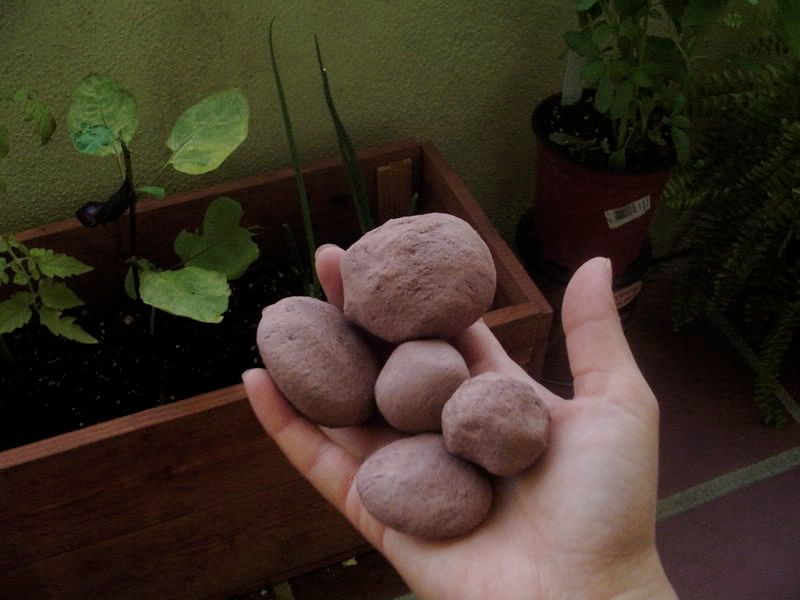
 Now this is an idea I'd consider for helping to restore California's natural flora in our heavily invaded landscapes:
The Conservation Council of New Brunswick is hoping a new tool it's using to encourage the growth of native plants and species will take off with a bang.
The environmental group will be handing out so-called seed bombs at Fredericton's farmers market in the coming months.
People will be encouraged to throw the little balls of soil, nutrients and New Brunswick wildflower seeds into vacant lots, backyards and other places that need greening, spokeswoman Tracy Glynn said.
"It's needed. Our biodiversity is at threat and I think we need something to protect our native biodiversity," she said.
"We were trying to do something about the problem of the disappearing bumblebees, so we wanted to encourage biodiversity in urban areas, so we thought by planting pollinator-friendly vegetation like New Brunswick wildflowers, it would also help the bumblebees that are in trouble," she added.
When I was reading this article, I got the image of needing to do this by dropping giant seed bombs from helicopters here in California. But it wouldn't be easy. Many of our native grasses and wildflowers have been gone from the bulk of our grasslands and oak savannas for decades. As a result, there is no longer a seed source for them to return. On top of that, a thick mat of highly competitive weedy non-native annuals inhibits native seedlings from establishing. So even if we dropped cruise missile-sized native seed bombs from helicopters, they'd only take hold if the exotics were beaten back by either properly-timed grazing or burning. So maybe we'd need Apache helicopter gun ships... ;-)
That said, it would be a fun exercise to see how this works in local communities, to at least get our native flora re-established in the landscaping of our parks, school grounds, vacant lots and yards. I've been doing this very thing little by little over the last few years, and it's fun to watch the colorful natives bloom each spring.
Read more>>
...


