Monday, September 26, 2011

'Climate Change' ... and 'Global Warming'? What Next in Climate Communication?


Right now it seems that in Washington D.C., at least, nobody wants to talk about 'climate change' and 'global warming'.

This post from the Yale Form on Climate Change & The Media asks if these are the new dirty words, and "if so...what then"?

Most of those interviewed for this Yale Forum discussion focus on the importance of communicating the economic and health benefits of clean energy technologies. For example, attorney Jim Marston of Environmental Defense states that:
"In the short-term, I think we're focusing more on heath and more on clean energy solutions -- things that get us off fossil fuels, things that get us more efficiency, things that take advantage of the fact that Americans are in love with gadgets coming out of the high-tech sector."
As I relayed in this post -- penned after a successful encounter with a couple of climate change deniers -- energy, economy, national security and patriotism can all be leveraged to offer identity-based arguments that enable bi-partisan consensus.  Why should we send billions of our energy dollars to foreign countries when we can produce our energy from the sun and wind right here in America, and support American companies and jobs?!

As far as I'm concerned, it's not HOW we get to solutions, it's THAT we get to solutions. That's fine, and to be expected.

However, after this spring and summer's record-setting tornados like the one that leveled Joplin, MO, the historic Mississippi River floods, the ongoing hellish Texas wildfires, and catastrophic Hurricane Irene, I'll bet that more people are wondering whether it might be a good idea to take steps to re-stabilize the climate for climate-focused reasons.

It seems more and more people are waking up to the fact that our climate is doing weird (and record-setting) things old timers don't remember it doing, and it's getting more and more dangerous every year.  As more people talk, social forces like peer influence will likely take hold, generating support for the climate change and clean energy solutions that would also be huge boons to our economic recovery and national security.

Let's see...

Read more>>
...

Friday, September 23, 2011

A Lehman-Style Environmental Collapse or An Unprecedented Opportunity for Civilization?


"In order to exploit the natural world, we have rigged accounting rules and ignored the financial and ecological value of intact ecosystems, biological diversity, clean water, and many other forms of the planet's natural capital. This has actually worked for some decades and created Western wealth as we know it.

But the Ponzi scheme of hyper-consumerism is approaching the equivalent of the Lehman collapse of 2008."

Read more>>

Note: Here at CV Notes, we choose to channel our awareness of these types of scary -- and very real -- risks into developing solutions.  We like the flip side of the Collapse coin: there is unprecedented opportunity to restore lives and ecosystems alike by protecting our children from having to face these types of risks.
...

Thursday, September 22, 2011

Global Weirding: Nature Can't Save Us From Ourselves


Some who refuse to accept that that heat-trapping carbon pollution poses significant risks to human well-being, not to mention ecosystems and biodiversity, claim that more CO2 will be good for us.  Plants will grow more, it will be warmer, and more plants in a warmer climate will absorb more CO2, helping to stem heating.

Is this true?

Huffington post reports on a new study from Northern Arizona University, published in the esteemed journal, Nature, which throws some surprising cold water on to that idea:  
The study -- a meta-analysis of dozens of separate studies of soil emissions in variety of ecosystems, including forests, farmland, rice paddies, grasslands and wetlands in North America, Europe and Asia -- found that increased atmospheric carbon dioxide causes soil to release methane and nitrous oxide in amounts significant and sustained enough to reduce the overall cooling effect of increased biomass by nearly 20 percent. 
What's going on? Organisms in soil, it seems, thrive on both nitrate and carbon dioxide. These microbes also produce methane and nitrous oxide, which are, respectively, about 25 times and 300 times more effective at trapping heat than even CO2. As humans pump more carbon dioxide into the atmosphere, these organisms pump out more N2O and methane.
The body of literature on this effect suggested that it varied in degree from one ecosystem to another. This variation made it difficult to determine whether, on the whole, its impact on the global climate was significant or merely a wash. Yet the new study provides a clear answer: the effect is significant.

Climate scientist, Ken Caldiera, summed up the implications of this study quite concretely:
"To solve the carbon-climate problem, we need to transform our energy system into one that does not dump its waste into the sky," Caldeira said. "Land plants help. It looks like they won't help quite as much as we thought they would. Clearly, we can't expect nature to solve our problems for us."
The bottom line: as much as scientists know about how human activities are heating the ecosystems that sustain civilization as we know it, untold numbers of surprises await us if we continue to mess with the stability of our climate.

Do we really want to find out what's behind those doors?

Or do we want to choose the door that we KNOW what's behind: a clean energy technology revolution that creates exciting new industries, creates millions of new jobs, saves the public $billions per year in health costs of dirty energy-caused air pollution, cuts off the flow of oil money to terrorists, and gives America the morale boost that our economically hurting citizens so badly need?

Read more>>
...

Wednesday, September 21, 2011

Businesses Getting into the Ecosystem Services Game


Following up on yesterday's post about Asia's lessons on the value of ecosystems, how are businesses getting involved in protecting and restoring ecosystem services? And why should they?

This excellent piece on The EcoInnovator provides some answers, noting that:
"a growing number of leadership minded companies are realizing that correctly pricing nature can inform smarter financial decisions and lead to real business opportunities.  This is why Dow has chosen to invest $10M with The Nature Conservancy to incorporate the value of ecosystem serices into the company's decision making; specifically starting with three of Dow's manufacturing sites.  Similarly 14 leading companies chose to road test the World Business Council for Sustainable Development's Guide to Corproate Ecosystem Valuation.  It is worth noting that these companies are not waiting for a top-down governmental mandate but instead (are) leading the way to a world where business decisions are aligned wit the laws of nature."
"So how does an individual company get started?" the authors ask.

A good first step, they say, is to assess which parts of your business are materially impacted by or dependent upon ecosystem services.  Is your business or supply chain prone to drought? Are critical inputs dependent on pollinators?

They emphasize a business case for ecosystem services that we'll be hearing more and more of as our civilization increasingly bumps up against "Peak Everything": Focus on benefit to your company. How might more sustainable practices help you increase resource and energy efficiency, boost your brand's reputation and sales, and reduce business risks -- including those increasingly associated with global weirding (e.g., floods, droughts, wildfire, severe storms, insect infestations)?

If companies such as Coca Cola and McDonalds are realizing the benefits of asking these questions, why shouldn't your's?

Read more>>
...

Tuesday, September 20, 2011

New Research: Protecting Forests Will Deliver Economic Boom for Southeast Asia


Are forests more valuable to humanity left standing or for what's produced when they're cut?

More and more, we are learning just how much value healthy, intact and sustainably managed forests provide to society.

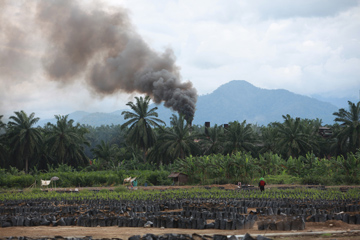
According to this post on Mongabay.com, for example, this lesson is being realized in Southeast Asia, where tropical rainforests face a range of threats, including conversion to palm oil and rubber plantations, illegal logging and poaching, and slash and burn agriculture.  It turns out that ecologically unsustainable practices are proving to be economically ruinous:
  • The Rajawali Institute for Asia at the Harvard Kennedy School of government estimates that by eliminating its natural capital for negligible gains, deforestation caused losses of $150 billion to Indonesia between 1990 and 2007
  • An investigation by a task force set up by Indonesian President Susilo Bambang Yudhoyono found that clear-cutting and conversion of forests to palm oil is so widespread that it's drastically reduced the availability of wood to be cut, costing the Jambai province, alone, 76,000 jobs in the sector.
  • "According to the Rand Corporation, particularly intense forest fires in Indonesia and Malaysia have increased deaths by 22 percent.  Bad air quality can also send people to the hospital and increase asthma attacks, lowering productivity.  One of Southeast Asia's challenges is attracting global companies to locate high-level executive headquarters in the region, in part because of the intense air pollution exacerbated by forest fires."
Clearly, the economic impacts of "unsustainability" reach far beyond agriculture and forestry sectors, influencing public health, safety and economic competitiveness.

Conversely, more sustainable practices are being found to confer wide-ranging socio-economic benefits:
  • Studies have shown that coastal mangrove forests can reduce tsunami flow by as much as 90 percent. During the infamous 2004 tsunami, villages that had cut down their mangroves were often wiped out while those that maintained them fared much better.
So how do we incorporate the conservation value of intact forests, such as the mangroves described above, into our economic system?

In most cases, the only option for landowners to earn income and feed their families is still extractive: clearing, logging, farming, grazing, mining or otherwise converting their forest plots.  The Natural Capital Project, The Economics of Ecosystems and Biodiversity (TEEB) and The Partnership for Wealth Accounting and the Valuation of Ecosystem services (WAVES) are among those making progress developing systems for valuing ecosystem services and compensating landowners whose property provides them. 

But at a time of increasing financial hardship and budgetary constraints, will we be able to deploy these new payments for ecosystem services systems quickly enough to restore and protect the world's remaining hot spots of biodiversity?

If there were ever a time for the emerging field of sustainable business to help conservationists entrepreneurially innovate, this is it.

Read more>>
...

Monday, September 19, 2011

Prescription: One Weekly Meditative Hike


Did you spend any time in Nature this weekend?

Do you have a favorite open space where you go to escape the stressful noise of our go go go society – to find the quiet that you need to hear the guiding voice of your heart whispering into your soul what direction to take next?

If not, try it next weekend. See if your work week isn't surprisingly productive - and if that's just one of many ways your week goes better...

...

Friday, September 16, 2011

Counting What Counts in the World of Sustainable Business

Yesterday, I talked about the benefits to consumers offered by the radical transparency tool, Good Guide.

In the world of sustainable business, "radical transparency" -- being forthright about the health and environmental impacts of your products -- is, a rising trend as well.

No doubt, the hard work that enables transparency is important for fostering customer support for products that are healthier for ourselves and the ecosystems that human well-being depends upon.  It's definitely helping Conservation Value, Inc. client, Spaldin Sleep Systems, build trust with its customers.

What else can businesses do with all this information to boost their profits and productivity?

The important thing to remember, says Jim Hartzfeld in this insightful post, is that "putting your primary efforts where they can have the best environmental or social impact will have much more impact in the long run. Sustainability reporting has an important role in guiding your strategic decisions, but you have to count what counts."

What does that mean?

In Hartzfeld's words:

The general perception is that “You can’t manage what you don’t measure,” which is absolutely appropriate in day-to-day management decisions. But just because you can count something doesn’t mean it counts. As Robert F. Kennedy once said about the gross national product, it “measures everything, in short, except that which makes life worthwhile.” And in strategic decision-making, intangibles like innovation and employee and stakeholder engagement factor very much into your success.
The MIT Sloan School of Management and Boston Consulting Group’s 2011 report “Sustainability: The ‘Embracers’ Seize Advantage” (http://bit.ly/gxUsJo) offered seven practices to learn from “embracers,” those aggressively implementing sustainability-driven strategies. The report highlights this seeming contradiction in leading companies who seek to measure everything (and if ways of measuring something don’t exist, start inventing them) and the ability to value intangible benefits seriously.
Then focus on the things that really make a difference to get ahead.
Once you have established a baseline and used the gritty detail to chart your course, prioritize only the aspects that will create the most material changes and focus your energy there. 
The results, as more and more companies are learning, include improvements in energy and resource efficiency (and thus reduced costs), reduced risks, and boosts to brand reputation and sales.

Read more>>
...

Thursday, September 15, 2011

"Upgrading" to Greener Products


Yesterday, I posted about the health and environmental benefits of green clothing.  Of course, clothing is just one area in which more and more people are concerned about the health and environmental impacts of the products that they buy.

But how can you find safer products? Is there a way to quickly and easily evaluate the health and environmental risks posed by your everyday products?

The wonderful web site, Good Guide, makes it easy for you by giving the everyday products you buy a simple score of 1-10 in health, environmental and social categories.  With a single click you can view alternatives with better scores.  There are your replacements.

If you download the Good Guide mobile app (FREE), you can use it to scan bar codes of products while you shop.  People might look at you funny, but it's a simple way to vote with your everyday choices to protect the health of your family and our environment.

Since I started Good Guide, I've upgraded my deodorant, sun screen, tooth paste, mouth wash, moisturizer and shampoo, among other products.

Funny, I just used the word "upgraded" when talking about changing to a greener option.  Too many people still don't think of "greener" as an "upgrade". Yet...

If the product does its job in a way that's healthier for me and healthier for the Earth, then it is, in fact, better, right?
...

Wednesday, September 14, 2011

I'll Take Clothing Without Toxic Chemicals, Please

GreenPeace Image from Grist.org
I don't know about you, but if I found out that there were toxic chemical residues in my clothing, I'd be worried about what's touching my skin all day.

A recent GreenPeace study tested products made by 14 top clothing manufacturers and found traces of toxic chemicals harmful to the environment and human health.

The chemicals found, known as nonylphenol ethoxylates, break down into substances with "toxic, persistent and hormone-disrupting properties."  Would you want to wear that?

How about impacts to water quality?  When GreenPeace looked at the wasterwater from two factories that makes clothing for these brands, they found that:
"Eight samples of wastewater from two factories in the Yangtze and Pearl River deltas, identified as suppliers for the brands, contained "a cocktail of hazardous chemicals.'"
Do you think the executives of those factories would let their children swim in the water near these factories?  Maybe that would be a good water quality test to implement...

If you want to support companies that offer solutions to this mess, how can you find them?  Is organic really clothing better?

Clothing made from organic fibers (organically-farmed; e.g., USDA organic-certified) means that the crops (e.g., cotton) were grown without the use of synthetic pesticides.  Since still more chemicals are used to process raw fibers into a textile, USDA organic certification of fibers is not enough to protect you from the types of chemicals found by GreenPeace.

For full protection, you need to look for organic textiles - those certified by the Global Organic Textile Standard (GOTS) to be made with (1) organically grown raw fibers AND (2) organic fibers that have been processed into a textile without harmful chemicals.

I talk a bit about this subject in my posts for Triple Pundit about how to purchase a green mattress.

It's great that GreenPeace is publicizing the importance of green clothing, which is clearly the better choice for the health of people and ecosystems alike.

...

Tuesday, September 13, 2011

New Climate Communication Study: Polar Bears Don't Work

How can we get past America's uber-partisan divide on climate change  to foster political support for bold policy solutions?

According to a new study, images of distant polar bears and melting ice sheets not only don't cut it, messaging-wise, but actually make the problem worse. As reported by Big Think:
Climate change campaigns in the United States that focus on the risks to people in foreign countries or even other regions of the U.S. are likely to inadvertently increase polarization among Americans rather than build consensus and support for policy action.
Fortunately, the researchers found a way to build support for climate policy solutions: to use local stories that make the benefits of action immediately relevant to the community:
Research shows that individuals are more likely to support action on a problem when those threatened or at risk are perceived as more socially similar.  Conversely, when those affected are perceived as more socially distant, support for action is likely to be less.
That certainly makes sense...

Memo to those working to more effectively communicate the need for climate change solutions: use locally relevant pictures and stories.  Enough with the remote images already (in themselves, at least). How does the problem (including as illustrated by stunning remote imagery) really impact the lives of, say, Wal-Mart shoppers? How are the solutions going to protect local communities and improve lives where I live?

These types of messaging improvements are opportunities that Seth Godin talked about back in 2006, but that the climate action community still hasn't fully figured out how to implement.

This new study provides important clues on how to get the important job done of maximizing influence across the political spectrum.

Read more>>
...