Showing posts with label recycling. Show all posts

Wednesday, January 27, 2010

Hit By Crumbling Infrastructure and More Posts Coming Soon

Just back from some time up in the mountains while our home was cleansed of a mold outbreak.  We think it was caused by a buildup of water beneath our house that was triggered by a ruptured water main that sent water flowing literally out of the street in front of our house last year.  Our house is downhill from the street and the watermain flowed from the street all day.  It isn't too hard to connect the dots and hypothesize where all the water in the crawl space beneath our floor came from... 

Yep -- it appears that the growing problem of our crumbling infrastructure impacted our lives (and clothing) in a pretty inconvenient way.  We had a bunch of mold-covered shoes that looked like the one in the photo, and a splotches of black mold on the outside-facing walls in several of our rooms -- fortunately very little in the baby's room. 

The good news -- the incident gave both Suzanne and I an excuse to shed a whole bunch of clothing and other stuff that neither of us wear or use anymore.  What was not ruined is going to GoodWill.  It always feels good to shed stuff!

I'll be catching up on the latest in Conservation Value-oriented sustainability news over the next few days.

More posts coming soon...

Thursday, January 07, 2010

Converting Garbage to Gas: Landfill Energy Projects On the Rise Across U.S.

The only thing worse than getting stuck behind a stinky garbage truck at a traffic light is when the light turns green and you're left in a dark cloud of choking diesel exhaust.

It's disgusting.

Fortunately, as the Seattle Times reports, that experience is on the decline, as companies such as Waste Management convert their garbage dumps into landfill methane plants, which can produce thousands of gallons of liquid natural gas per day.

Since natural gas burns much cleaner than diesel fuel, the result is a classic sustainability win-win: garbage trucks that burn cleaner, powered by fuel that's cheaper and created from garbage-produced methane, which otherwise would seep from the landfill as a potent heat-trapping (greenhouse) gas!  

Almost 500 Waste Management Inc. garbage and recycling trucks run on this new source of environmentally friendly fuel instead of dirty diesel.

In a state that has passed the most stringent greenhouse-gas-reduction goals in the United States, the climate change benefits of this plant are twofold — methane from the trash heap is captured before entering the environment and use of the fuel produces less carbon dioxide than conventional gasoline.

"We've built the largest landfill-to-LNG plant in the world; this plant produces 13,000 gallons a day of LNG," said Jessica Jones, a landfill manager for Houston-based Waste Management. "It will take 30,000 tons a year of CO2 from the environment."

In 2009, the U.S. Environmental Protection Agency counted 517 active landfill energy projects in the nation's approximately 1,800 operational municipal landfills. That was up almost 50 percent from 2000, and 28 percent from 2004.

I'd love to learn more about the ROI of these landfill methane production systems -- how long it takes for the investments of companies such as Waste Management to pay off.  After they are paid off, of course, the gas is extremely low cost, increasing profits for the owner of the landfill.

Does anyone happen to know more about the infrastructure and operating costs of these systems, as well as their ROI?

Read more>>
...

Monday, January 04, 2010

Turning Commercial Food Waste Into Valuable Compost

A northern California town is launching a compost collection program that includes all commercial food wastes -- including meat and bones, which currently cannot go into backyard-type compost bins.

The new program will essentially pay for itself since the fees that the city has to pay to dump its garbage will be sufficiently reduced (a result of having less garbage to dump) to leave them with the cash needed to cover the cost of the composting effort.  Since the environmental benefits of the program include reduced landfill emissions of the heat trapping gas, methane, as well as creation of free fertilizer that can be sold to the region's citizens and wineries, it's got strong prospects to be a winner.

Reports the Santa Rosa Press Democrat:

Officials estimate 30 percent of the current waste going to landfills is compostable food scraps. Sealed in a landfill, the food emits methane, a toxic gas and a contributor to global warming.

A better choice, officials say, is composting. In a mixture of micro-organisms, air and heat, food scraps can be turned into soil in a matter of weeks, a more sustainable solution than the landfill.

“I believe in it,” said Nick Peyton, manager of Healdsburg Bar and Grill and a principal owner of Cyrus. “Restaurants turn out a tremendous amount of waste. This cuts down the waste by a huge amount. Instead of having just a whole ton of garbage, you have a lot of compost and a lot less garbage.”

The cost of the food waste recycling should not impact garbage rates, according to North Bay Corp. That's because start-up expenses should be offset by the decrease in the amount of garbage — and cumulative dumping fees — at the landfills.

We compost all the food scraps we can in our backyard bin.  It's quick and easy, but I sure do wish there was something I could do with meat scraps (which fortunately, we don't have many of).

I look forward to watching this type of win-win program expand to homes and businesses across the state and country.

Read more>>
...

Saturday, December 05, 2009

Does Compostable Foodware Really Decompose In Landfills?

Bioplastics are nice because they don't come from petrochemicals, and if taken to a compost facility, they can be composted.

However, as this paper points out, they do NOT decompose faster than regular plastics in the landfill, so tossing them into the garbage isn't going to make too much of a difference in terms of landfill space:

The Degradability Myth
Why Diversion Makes More Sense

The Environment and Plastics Industry Council (EPIC) does not pull any punches in their paper "Biodegradation Won't Solve the Landfill Crunch".

EPIC has graciously allowed us to reprint this paper that explains why evidence from North American landfills supports their case that biodegradable anything in a landfill does not extend landfill space or ever go away.

The bottom line here is that if you really want to reduce waste in the landfill, you need to divert as much as possible from the garbage bin.

Make sure your compostable food waste makes it into your compost bin.  If you use bioplastics (e.g., cups, utensils, plates), remember that they decompose at higher temperatures than food waste, so need to go to a compost facility if you want them to be truly composted.

Read the full paper>>
...

Friday, November 06, 2009

Recycled Paper Business Booming


Buying recycled -- good for our forests, a boon to our businesses:

For retailers, the "100 percent recycled" label on a product is a badge of honor declaring civic responsibility. For consumers, it's a status symbol showing environmental awareness.

For manufacturers, such as Longview Fibre Paper and Packaging, the label can be a gold mine.

More>>
...

Thursday, October 29, 2009

Rechargeable Batteries Are Saving Us a Ton of Money and Reducing Our Waste

With a new baby, one of our life-savers that she loves is an electronic swing, which for some reason is battery powered.

I sure wish we could just plug it in, as we need to replace the batteries -- 4 D's -- about every 4 or 5 days.

Fortunately, we have a couple of battery chargers -- each several years old -- that work great, and several sets of rechargeable batteries.  So instead of having to run out and buy new batteries every few days, and dispose of dead batteries every few days (into our electronics recycling bin of course), we just recharge 4 at a time and we're good to go.  In this economy, if I had to buy each round of batteries we're using, I'd be crying as much as the baby!

I once read, I think in the Real Goods Solar Living Handbook, that a set of 4 rechargeable AA batteries lasts so many recharges that if you purchased those batteries one pack at a time, you'd be spending something like $1,600 (and that doesn't include the gas, time and parking from trips to the store). 

I haven't been counting, but we rarely have to buy new sets of rechargeables -- so that sounds about right.  As a bonus, of course, we're keeping hazardous waste out of the landfill, and reducing the amount of cardboard and plastic battery packaging that we have to recycle.  Even better, rechargeables are wonderfully convenient -- plunking batteries back into the recharger for a few hours is much easier and less less time-consuming than having to go out to the store.

Using rechargeable batteries is really a no-brainer of a money-saving green practice.  If you haven't gotten yourself a recharger yet, give it a try.  You'll be glad you did.
...

Thursday, October 22, 2009

Nudging Recycling From Less Waste To None

Recycling and composting is catching on across the country.  The NY Times reports:

At Ecco, a popular restaurant in Atlanta, waiters no longer scrape food scraps into the trash bin. Uneaten morsels are dumped into five-gallon pails and taken to a compost heap out back.

And at eight of its North American plants, Honda is recycling so diligently that the factories have gotten rid of their trash Dumpsters altogether.

Across the nation, an antigarbage strategy known as “zero waste” is moving from the fringes to the mainstream, taking hold in school cafeterias, national parks, restaurants, stadiums and corporations.

One of the key solutions to the crisis in global land use is to use less resources -- and a big key to using less resources is to generate less waste.  Whether it means recycling, composting, and cradle to cradle production (in which products are designed to be returned to the manufacturer so parts can be re-used), or buying recycled and cradle-to-cradle products only, we can and should all get involved.

What do we do? 

In addition to reducing packaging and re-using and recycling compulsively, we buy recycled, and love the fact that instead of buying our laptops from Dell, we can lease them -- and then send 'em back to Dell so they can re-use whatever they can.  We also compost our food scraps, and use fallen leaves from backyard trees as the carbon source that we mix into the green kitchen waste to generate the chemical heat reaction that is key to composting.  Composting provides us with a FREE nutrient-rich, water-retaining dark soil ingredient that I mix with vermiculite and peat to create our garden mix.   So our food scraps provide the nutrients needed to sustain our delicious organic garden!

Municipalities are catching on at varying speeds.  I know that while we have a green bin here in El Cerrito, my wife and I's parents -- from New York and Virginia, respectively -- had no idea what it was for when they first saw it.  Business associates from other parts of the country look curiously at "Compost" bins they see in public places like the Ferry Building in San Francisco.  So many parts of America still have a lot of catching up to do on the Zero Waste front.

That said, our system in California is far from perfect.  What we need more of here in the East Bay, for example, is the ability to put not only food waste, but also compostable cutlery, dirty paper towels, etc. into our green bin, which right now only takes lawn waste.  I know things like compostable cups and forks decompose at different temperatures than food and lawn scraps, so I'm watching curiously to see how cutting edge programs like that of the City of San Francisco handle mandatory composting.

Read more>>
...

Wednesday, October 21, 2009

Turning Waste Into Energy (and Other Things)

What to do with all of our trash.  The Triple Pundit talks about the potential for our trash to help meet our energy needs.

Landfill gas-to-energy (LFGTE) facilities turn landfills – and our daily waste – into a source of clean, renewable energy. According to the EPA, there were 480 operational LFGTE programs in the U.S. as of December 2008. These generate about 12 megawatts of electricity per year – for reference, the average power consumption of a typical American household over the course of a year is about 8,900 kilowatt-hours. Waste Management alone hosts LFGTE projects at more than 100 of its landfills, with the goal to develop an additional 60 projects by 2013. In expanding these projects, Waste Management will produce enough landfill gas to generate 700 megawatts of energy, enough to power nearly 700,000 homes.

The more we can do with less, the better, and energy creation is likely just one of many reasons I think this century will find us looking to our landfills for more and more resources.  Right now, America has unfathomable amounts of wood, metals and who knows what else buried away in our landfills.

I remember when precious metals prices were going through the roof last year, and people were stealing the copper caps on top of the wood fence in front of our house, copper wiring from irrigation systems, and other such items that have always been safe in public.

It was at that point that I foresaw landfill mining as a future industry.  Does anybody know of any companies that do this yet?  Does anyone else predict that companies like Waste Management will eventually start to mine their landfills for metals and other resources that become rare outside of landfills?

Read the full 3P post>>
...

Friday, October 16, 2009

Bottled Water Sales Down, But Why Are People Still Paying For It?

Treehugger has a good post that reports a small decline in bottled water sales, and then gets into the behavioral question of why people still spend way more per gallon on it than they do on gasoline:

I suspect that convenience and a recently acquired habit are major reasons why most people still buy so much bottled water. The BPA in water bottles thing didn't help. That said, there have been gradual social and political changes which have come to reinforce the convenience factor.

As we've reported here in the past, drinking bottled water is both a wasteful and environmentally destructive habit. If convenience is the motivation, what are other options?  Well, we use our own refillable stainless steel water bottles -- and they're pretty convenient (plus it's comforting to know I'm not drinking any plastic particles).

If your home drinking water isn't safe, the most eco-friendly option is to explore the wide variety of filtration systems.  A secondary option is to explore the re-fillable 5-gallon jug services, which are both cheaper per gallon than bottled water and generate far less waste. 

If you work for a business that insists on selling bottled water, what are your best choices?  The Better World Shopping Guide gives "A"-level grades to Biota and Ethos and "B"-level grades to Trinity, Crystal Geyser, Aquafina and Essentia.

Read the full post>>
...

Sunday, October 21, 2007

Will Peak Oil Boost Re-Using and Recycling?

With oil prices skyrocketing and Peak Oil possibly here now, the cost of harvesting and transporting raw materials for the construction and renovation of homes and buildings is only going to go up. The good news - for landfills and forests alike - is that this development is likely to reduce stress on both.

As the New York Times reported the other day, the practice of recycling homes - dismantling old structures to use the materials for newly planned ones - is on the rise. It both reduces waste and saves considerable amounts of money:

While the standard demolition quotes were around $25,000, (a couple in Chicago) spent $38,000 to have a contractor...unpiece it over six weeks last summer. They expect to come out even or better after selling door hardware, windows, appliances and other components at a salvage auction and reaping a tax deduction by donating the rest to a reuse store.

What I really like (compared to the highly annoying noise of demolition) is that:


“It was cleaner and quieter than demolition,” said Ms. Bronstein, an assistant professor of communication at DePaul University in Chicago. “We didn’t have dust flying everywhere.”

The result of this kind of practice not only saves money for homeowners, but also for buyers of home improvement items, which are typically much cheaper when purchased used:

...many cities now have “reuse” stores, which sell salvaged goods — from wall sockets to vintage redwood floorboards — for 50 to 75 percent off what similar products would cost if purchased new.

With oil prices rising, look for these types of practices and related businesses to take off!

Thursday, September 27, 2007

Frontiers in Ecology: Plastic Waste in Oceans Poisoning People?

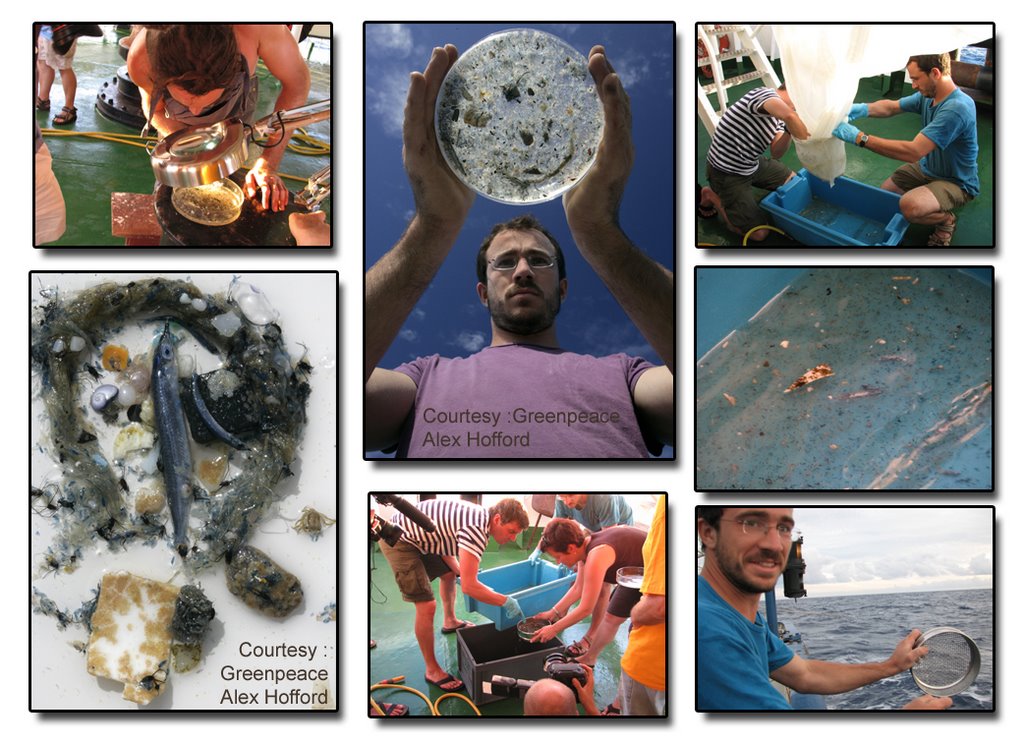
The term "nurdle" may sound cute, but in reality, these cylindrical shaped plastic pellets used in manufacturing and packaging are making a big mess of the health of our oceans -- and probably of people who eat fish.

As Pulitzer Prize-winning journalist, Kathy Ellison, reports in the September, 2007 issue of Frontiers in Ecology & the Environment:

For marine life, nurdles can be poison pills. They look like fish eggs, yet soak up and concentrate toxic pollutants such as PCBs. Tokyo University geochemist Hideshige Takada has found that plastic pellets eaten by birds concentrate toxic chemicals to as high as one million times their normal levels in seawater.

Of course, birds aren't the only victims. At the University of Plymouth, marine biologist Richard Thompson points out that nurdles and other plastic trash inevitably break down, through the force of tides and ultraviolet light, into ever-tinier fragments. He has found some pieces as small as 20 microns - smaller than an human hair -- which are easily consumed by some of the sea's most diminutive creatures. He assumes the plastic bits, which decompose but don't ever biodegrade, are eventually ground down into powder, which can be swallowed even by zooplankton. Scientists have yet to pinpoint the impact on the marine food web or on people who eat fish that have eaten nurdles and other nurdle-eaters. But I think it's fair to say that it doesn't look good for those of us at the top of the food chain.

Amazingly, as Ellison reports, a prominent marine biologist reveals that, "the plastic outweighs the plankton 6 to 1 in the central Pacific, and 2.5 to 1 in the surface waters of southern California."

Fortunately, officials are starting to take action to curtail the use of nurdles and nurdle-related materials. In addition to a bill making its way through the California State legislature, Santa Monica and San Francisco have banned Styrofoam for restaurant take-out. San Francisco recently became the first US city to ban plastic bags.

Unfortunately, it turns out that biodegradable plastics (which we've previously gotten excited about and used at Conservation Value Institute's benefit events) aren't even the answer. Reports Ellison:

As Alan Weisman recounts in his new book, The World Without Us...biodegradable plastics...(are) a mixture of cellulose and polymers. Once the cellulose starch breaks down, thousands of clear, nearly invisible plastic particles remain.

So what's the answer?

Ellison notes the recommendation of marine biologist, Thompson, that "reducing, reusing, and recycling is the answer (to keeping all these plastics out of the oceans)," adding that, "he'd support a ban on those billions of plastic bottles with non-recyclable caps."

Monday, June 11, 2007

Oregon Adds Water Bottles to Its Bottle Bill

There are few unsustainable practices dumber than buying bottled water, which usually comes in cardboard cases sealed with plastic.

I love the subhead of this article on the question of whether bottled water is any better than tap water (it usually isn't): Americans are spending billions on a drink that is virtually free.

The sad thing is that only about 23% of those little plastic bottles get recycled. For awhile now, people have been saying that a solution would be to add them to state bottle bills, so there is a financial incentive to recycle them.

Well, Oregon has just stepped up, adding water bottles to its bottle bill (and also establishing a free statewide recycling program for electronics!)

Nick over at The Triple Pundit thinks that there are probably some pretty lucrative business opportunities waiting to be found in uses for all this plastic material that will now be kept out of landfills...

Saturday, March 03, 2007

Frontier in Ecology - Using Non-Recyclable Paper Waste for Compost

A tidbit from Frontiers in Ecology:

In "Facing up to our paper addiction", the magazine reports that "new research suggests that non-recyclable paper fibers could be used in compost that is better for plants than current horticultural growth media."

And it reduces several wilt diseases!

"This provides an obvious additional commercial use for the vast amount of paper waste generated by offices and homes," say researchers Ralph Noble and colleagues at Warwick University, UK.

Wednesday, September 13, 2006

From Zero Waste to Biodiversity Conservation - of Recycling and Still-Undiscovered Species

Two stories in the last few days' environmental news have really struck a chord with me as far as just what it means on the ground - in terms of protecting natural habitats and their biodiversity - when we talk about working toward Zero Waste goals.

First, at a ceremony commemorating the State of California for achieving its goal of diverting over 50 percent (now 52 percent) of the 76 million tons of solid municipal wastes it generates yearly, Marin County was honored for recycling 65% of its garbage. That is both impressive and promising, and hopefully their achievement will guide other counties, cities, and states toward finding ways to achieve zero waste goals.

It is particularly important given the often forgotten linkages between these kinds of accomplishments in recycling and other types of accomplishments in protecting the environment. For achievements in recycling not only mean reduced waste going into landfills, and less space needed to be occupied (and purchased - expensive!) to put our garbage. They not only save us and future generations natural resources - allowing materials such as paper, cans, bottles and plastics to be made from recycled materials instead of raw materials such as trees, freshly mined aluminum, and fossil fuels (and the expansive amounts of water that it takes to operate extractive operations such as mines).

Achievements in recycling mean that we are making strides in protecting our remaining natural habitats - from forests to deserts, from oceans to rivers - and their biodiversity. For example, Conservation Value's brochures and business cards are made from Living Tree's Deja Vu matte paper, made from 40% post-consumer waste and 10% hemp/flax. According to Living Tree, using one ton of this recycled paper saves 12 fully grown trees, 3,466 pounds of wood use, 2,461 kilowatt hours of electricity, 1,049 pounds of greenhouse gases, 541 pounds of solid wastes, and 5,097 gallons of water. With Americans alone using 85 million tons of paper per year, go ahead and calculate the conservation achievement if all of us used this paper! By recycling and buying recycled, Americans can save about a billion trees per year!

The importance of this relationship between recycling and biodiversity conservation was demonstrated yesterday in India, where a new species of bird was discovered!

So what does the discovery of a colorful new bird species in India have to do with achievements in recycling?

The fact that new species of birds are still being discovered provides a reminder of the riches of undiscovered plants, fungi and other species that, likewise, remain to be discovered, and that could provide such societal benefits as cures for cancer, solutions to fossil fuel dependence, and rescue from diseases that attack our food supply. But that could also be whiped off the face of the planet, undiscovered by humanity, their benefits lost, if they are rare or localized species that end up being lost to such extractive forces of habitat destruction as deforestation, mining, and oil and gas development.

The more we recycle and buy recycled, the fewer habitats that could contain such undiscovered natural riches will be destroyed. And the more likely it will be that these riches will be found and used to improve our lives and the lives of our children for generations to come.