Just a note that we'll be blogging more soon. Been a very busy few weeks here at CV as we've been hard at work getting the development of a new web system (slated for launch in 2007) going.
We are currently raising funds to support the completion of what we promise will be a very unique and excitingly useful (and even fun to use) online sustainability project. If you're interested contributing to this fund via a tax deductible contribution, please click here to donate online or learn where to send a check.
More soon...
Monday, October 30, 2006


Wednesday, October 11, 2006
Transition to Clean Diesel in the U.S. Almost Complete - Now How About Some Hybrid Diesels in the U.S.!
 The EPA has issued a press release, which many major newswires have picked up, that the transition to clean diesel fuel in the U.S. is almost complete.
 I'm hoping that this opens the door to being able to buy a Toyota or Honda diesel in the U.S. sometime (very) soon. Ideally, a hybrid diesel. Such as Toyota's ES3 hybrid diesel, a more-than 5-year-old concept car that gets over 100 mpg! Or for my ecological field work, for which I need a high-clearance 4WD vehicle to access remote study sites, a hybrid diesel Toyota Hi-Lux.
If people who like the height and size of SUV's that get 10-20 mpg could purchase diesel versions, which get significantly better fuel economy, or better yet, hybrid diesel versions that get 40+ mpg, this would be a tremendous step toward both freeing America from dependence on foreign oil, and reducing our emissions of greenhouse gases and other harmful pollutants. This is especially true because without any alteration, diesel vehicles can run on home-grown biodiesel, and in summer months in warmer climates, you can even mix in straight vegetable oil, including filtered waste oil that local restaurants will often give you for free.
If I could be driving a hybrid diesel that I run on biodiesel (and mix in waste vegetable oil to help local restaurants save money on waste disposal while I save big bucks on gas), I'd be one very happy and energy independent camper - with significantly reduced gas costs and more money left in my wallet to spend on travel, music, home improvements and all sorts of other good things.
Friday, October 06, 2006
U.S. Loses Millions on Ecologically Damaging Post-Fire Logging
 In late August, I reported that a special issue of the scientific journal, Conservation Biology, has explored the ecological impacts of post-fire logging, and found them to be devastating.
Now ENS is reporting that on just one (very contentious) post-fire logging operation in Oregon, the U.S. government stands to lose $2 million. So post-fire logging not only causes tremendous environmental damage, but also is a big money loser for taxpayers.
Nice job.
That's $2 million that could be put toward education, feeding and providing healthcare for the less fortunate, supporting farmers, or simply be saved for more beneficial projects. In the case of this contentious Oregon timber sale and many others, post-fire logging is clearly not only the wrong ecological decision, but also the wrong economic one.
World Health Experts - Air Pollution Causes 2 Million Premature Deaths Per Year
 Environmental News Service is reporting that two million premature deaths per year are caused by air pollution.
This of course in addition to other health impacts of air pollution (from childhood cancer to asthma), and ecolocial impacts such as acid rain, global warming, ozone depletion, toxicity to trees and other plants, nitrogen saturation of soils that causes and accellerates invasions by nasty noxious weeds (thus harming agriculture)...
The good news - technologies and practices that reduce air pollution, from renewable energy to clean vehicles to green buildings and energy efficient appliances, help to solve all of these problems. Healthier people and planet alike!
Wednesday, September 13, 2006
From Zero Waste to Biodiversity Conservation - of Recycling and Still-Undiscovered Species
 Two stories in the last few days' environmental news have really struck a chord with me as far as just what it means on the ground - in terms of protecting natural habitats and their biodiversity - when we talk about working toward Zero Waste goals.
First, at a ceremony commemorating the State of California for achieving its goal of diverting over 50 percent (now 52 percent) of the 76 million tons of solid municipal wastes it generates yearly, Marin County was honored for recycling 65% of its garbage. That is both impressive and promising, and hopefully their achievement will guide other counties, cities, and states toward finding ways to achieve zero waste goals.
It is particularly important given the often forgotten linkages between these kinds of accomplishments in recycling and other types of accomplishments in protecting the environment. For achievements in recycling not only mean reduced waste going into landfills, and less space needed to be occupied (and purchased - expensive!) to put our garbage. They not only save us and future generations natural resources - allowing materials such as paper, cans, bottles and plastics to be made from recycled materials instead of raw materials such as trees, freshly mined aluminum, and fossil fuels (and the expansive amounts of water that it takes to operate extractive operations such as mines).
Achievements in recycling mean that we are making strides in protecting our remaining natural habitats - from forests to deserts, from oceans to rivers - and their biodiversity. For example, Conservation Value's brochures and business cards are made from Living Tree's Deja Vu matte paper, made from 40% post-consumer waste and 10% hemp/flax. According to Living Tree, using one ton of this recycled paper saves 12 fully grown trees, 3,466 pounds of wood use, 2,461 kilowatt hours of electricity, 1,049 pounds of greenhouse gases, 541 pounds of solid wastes, and 5,097 gallons of water. With Americans alone using 85 million tons of paper per year, go ahead and calculate the conservation achievement if all of us used this paper! By recycling and buying recycled, Americans can save about a billion trees per year!
The importance of this relationship between recycling and biodiversity conservation was demonstrated yesterday in India, where a new species of bird was discovered!
So what does the discovery of a colorful new bird species in India have to do with achievements in recycling?
The fact that new species of birds are still being discovered provides a reminder of the riches of undiscovered plants, fungi and other species that, likewise, remain to be discovered, and that could provide such societal benefits as cures for cancer, solutions to fossil fuel dependence, and rescue from diseases that attack our food supply. But that could also be whiped off the face of the planet, undiscovered by humanity, their benefits lost, if they are rare or localized species that end up being lost to such extractive forces of habitat destruction as deforestation, mining, and oil and gas development.
The more we recycle and buy recycled, the fewer habitats that could contain such undiscovered natural riches will be destroyed. And the more likely it will be that these riches will be found and used to improve our lives and the lives of our children for generations to come.

Tuesday, August 29, 2006
Communicating the Science of 'Salvage' Logging to the Public
 The new issue of Conservation Biology contains a special section on "The Ecological Effects of Salvage Logging After Natural Disturbance," with a particular focus on the politically controversial topic of post-fire logging.
Section editors, scientists Reed Noss and Bruce Lindenmayer, point out that in modern industrial societies, waste and messiness, such as that perceived to be caused by forest fires, are seen as bad and in need of "cleaning up" (i.e., logging). They continue that the fundamental justification for postdisturbance ("salvage") logging is that "if by cleaning up dead and dying trees after a disturbance, some money can be made from the timber, so much the better."
But is logging a forest after it burns the best way to maintain a healthy productive forest that provides not just wood for lumber, but also ecosystem services such as protection against floods and landslides, recreational opportunities, and biodiversity?
Quite the contrary, conclude Noss and Lindenmayer.
They state that "in many cases, forest ecosystems are more strongly affected by postdisturbance logging than by the initial disturbance... Ecologically informed policies for postdisturbance management of forests need to be in place before major disturbances inevitably take place in order to avoid the ad hoc decisionmaking that often leads to poorly planned and ecologically damaging salvage operations."
Contributor, Richard Hutto, concludes that he is "hard pressed to find any other example in wildlife biology where the effect of a particular land-use activity is as close to 100% negative as typical salvage logging."
Noss and Linenmayer sum up the section:
'The papers in this special section provide a strong argument for increased research and monitoring on the effects of natural disturbances and postdisturbance logging on forests. A call for more research is not a call for business as usual and certainly not a call for increased levels of salvage logging. Quite the contrary, available evidence points to often severe long-lasting negative effects of postdisturbance logging on a wide variety of ecosystems and their biota. To log what is often the most biologically diverse and threatened forest condition in the landscape is fundamentally irrational.""Finally", they note:
"we believe new terminology is needed. The word salvage implies that something is being saved or recovered, whereas from an ecological perspective this is rarely the case."As a scientist, I found this section to be a fascinating and important contribution to the field of conservation biology. However, as a connector between conservation science the the public, I wish that it had addressed more explicitly how post-fire logging affects ecosystem services - what are the best post-fire management treatments for maintaining such forest ecosystem services as protection against dangerous floods and landslides, water filtration/safeguarding of drinking water supplies, and providing healthy fish and wildlife populations important to hunters, fishers and biodiversity alike? In other words, how do different post-fire treatment options influence the livelihoods, safety, and quality of life of surrounding human communities and users of the forests?
These are the types of questions whose answers will, in my view, resonate most strongly with the public and decisionmakers as they strive to understand why it is important that forest management, especially of recently burned habitats, is based on sound science.
Here at Conservation Value, we'll continue to come back to this topic - the types of wording and communication approaches that resonate most strongly with the public's support for conservation and sustainability - so check back often.
Monday, August 28, 2006
E.O. Wilson's Plea for Christian Environmentalism
 The New Republic has just published Harvard conservation biology legend, E.O. Wilson's, plea for Christian environmentalism...
Wilson, as usual, states an elegant case. Some highlights:
- "In destroying the biosphere, we are destroying unimaginably vast sources of scientific information and biological wealth. Opportunity costs, which will be better understood by our descendants than by ourselves, will be staggering. Gone forever will be undiscovered medicines, crops, timber, fibers, soil-restoring vegetation, petroleum substitutes, and other products and amenities. Critics of environmentalism forget, if they ever knew, how the rosy periwinkle of Madagascar provided the alkaloids that cure most cases of Hodgkin's disease and acute childhood leukemia; how a substance from an obscure Norwegian fungus made possible the organ transplant industry; how a chemical from the saliva of leeches yielded a solvent that prevents blood clots during and after surgery; and so on through the pharmacopoeia that has stretched from the herbal medicines of Stone Age shamans to the magic-bullet cures of present-day biomedical science.
These are just a few examples of what could be lost if Homo sapiens pursue our current course of environmental destruction. Earth is a laboratory wherein nature--God, if you prefer, pastor--has laid before us the results of countless experiments. We damage her at our own peril."
Amen Dr. Wilson. Amen.
Tuesday, August 22, 2006
Soothing Relaxation: Nature's Healing Power
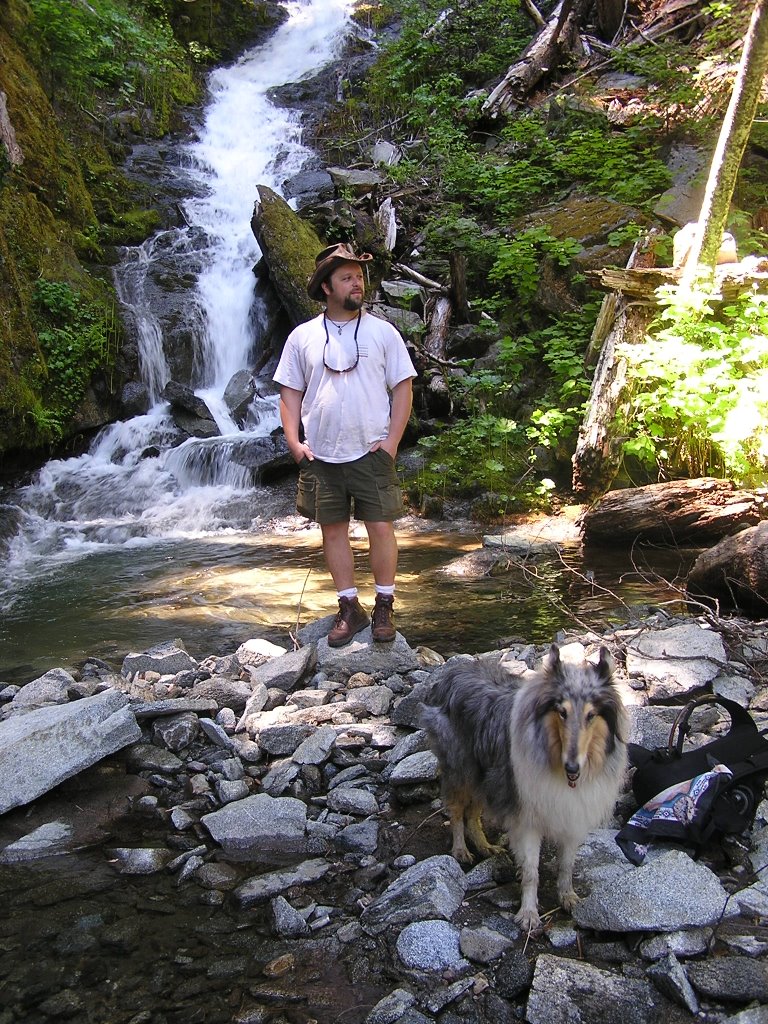 I spent last week up in northern California's Trinity Alps and Lost Coast, and once again, some time outside has left me relaxed, rejuevnated, positive, productive and full of fresh ideas.
Amid reports that Americans are receiving less and less vacation time and working more and more, I have to wonder whether we are actually getting any more done by working so much more or whether we are burning out our work force and just paying people to work more, while they become less and less happy, productive, and innovative.
I say that as long as employees can demonstrate an ability to get their work done and meet their deadlines, give them more vacation time, not less. I'd even give my staff an extra week or two of outdoors-oriented vacation a year, with the understanding that it is meant to inspire fresh ideas and increased productivity once they come back to the office. Less stressed employees mean happier employees, who are more pleasant to be around and foster a far more positive, productive workplace environment.
A few days outside does wonders for the soul in some kind of deep, primal way. It is a kind of relaxation and recharging that, for me at least, is not matched by any other.
Thursday, August 10, 2006
Green Buying Decisions: Purchase Price vs. Operating Cost
 It has often been said that one of the major hindrances to people buying clean, efficient, money-saving, and pollution-reducing technologies - be they solar electric systems, energy efficient appliances, or hybrid vehicles - is their higher purchase price.
This even though the operating cost (and thus lifecycle cost, from purchase to retirement) of cleaner technologies is often considerably lower.
Take for example the simple purchase of a compact fluorescent light bulb. Even back in 2001, when they were much more expensive and not as efficient, author, Andy Kerr, noted that an $8.99 compact fluorescent bulb used 11 hours a day (e.g., an outdoor light kept on for security reasons) would save the buyer $10.84 of electricity annually, compared to a typical $0.40 incandenscent bulb. That, Kerr noted, "works out to an annual return on investment of 121 percent over a one year period. Do you have any (legal) investments that pay over 100 percent annually"?
This 121% annual return didn't even finish covering the full savings of using that cleaner, pollution-reducing compact fluorescent! For the more efficient bulb lasts 10 times longer, so you can also add on savings such as less time spent purchasing new bulbs, and less money spent on gas needed for the trip to the store to purchase new bulbs (the way gas prices are going, you probably already have to spend more on the gas than on the bulb, itself!)
Obviously now, with compact fluorescents often down below $2/bulb (e.g., in the multi-pack at Costco), and energy costs rising, the return is much greater! While the initial purchase price of incandescent light bulbs is still lower, both the operating cost and the lifecycle cost of compact fluorescents constitute huge savings for consumers and businesses alike!
Does this apply to bigger purchases. Like buildings (huge purchases!)? A 2003 State of California report on The Costs and Financial Benfeits of Green Buildings found that while the cost of building green was $4 greater per square foot over 20 years, the energy savings alone were $5.79 per square foot, exceeding the costs. Water savings tacked on an additional $0.51 per square foot, and harder to measure "productivity and health value" was over $35 per square foot. As the report states, "total financial benefits of green buildings are over ten times the average initial investment required to design and construct a green building."
So then why do most people continue to focus on purchase price in making their buying decisions?
I'll bet if annual operating cost was stuck on a product right next to the purchase price, and people could see the entire lifecycle cost, their purchasing decisions would change considerably! This might already be starting to happen with some major appliances, where the yellow Energyguide tag lists the operating cost. New fridge--do you go with the much cheaper $500 energyhog or the more expensive $800 saver? Look at the annual energy cost and figure out how much money you'd have left in your pocket after a few years with the cleaner model (which would also leave you with the bragging rights that you get for doing your part to help fight global warming!) If the difference in operating cost is $100 per year, for example, you'd make your money back in 3 years, and after that, it's money in your pocket with bragging rights to boot!
I wish there were a web site that we could go to for quickly finding the operating cost of all sorts of common consumer and industrial items. That way when we're making a purchasing decision and considering the costs vs. benefits of going green, we'd be able to very quickly figure out how much we'd save on operating costs by spending a little more on purchase price!
There are already some resources that can help with this, that reveal the operating costs of:
- Cars and trucks: http://www.fueleconomy.gov/feg/bestworst.shtml
- EnergyStar provides the ability to compare things like energy use of appliances, electronics an other items, but not necessarily a clear, straightforward comparison of operating costs among all items.
- As noted earlier (and demonstrated in the image above), the yellow tag on many applicances reveals their annual operating cost. When shopping, don't forget to tally that up with the purchase price and figure out how much you'd save with the more efficient model over the lifetime of your appliance!
- I'm sure there are more out there...
It would be great if we could inspire the creation of a web site/database for comparing the purchase prices vs. operating costs of all sorts of paired/grouped greener vs. conventional items.
Wednesday, August 02, 2006
Sustainability for Security's Sake
 Among the most important benefits of society's current push toward sustainability is security.
It is now quite apparent that society's dependence on fossil fuels for energy supplies is threatening not just the environment, but also to plunge the world into deadly energy wars.
Already the U.S. has spent hundreds of billions of Americans' hard-earned tax dollars to (who's kidding who) position itself to defend oil reserves in the Middle East. Even a couple of years ago, people were already starting to realize that if the U.S. had invested the money it's spent on the Iraq War into clean, efficient renewable energy and energy conservation technologies and infrastructure, we could have set ourselves on the road to energy independence (and greatly enhanced our security, as well as the health of our environment and the stability of our economy!). Woops.
Now ENN has posted an intriguing article titled, "Where Are the World's Looming Water Conflicts?" The importance of this predictive article cannot be understated, especially given that 2002 predictions of a water war between Israel and Lebanon have now born themselves out.
The ENN article provides yet another reminder that whether through new techologies that conserve water (and save money!), or through improved land management practices that protect, purify, and store drinking and agricultural water supplies (i.e., management practices that protect the ecosystem service of water purification), sustainability is about much more than protecting the health of the environment.
It is about protecting and improving our security, the safety of our children and families, the stability of our economy, the public's health, and our overall quality of life.
Subscribe to:
Posts (Atom)