Wednesday, October 20, 2010

New Line of Green Beds Inspired by Nature: An Interview with Oscar Valdemoros of Spaldin Sleep Systems

I recently interviewed Oscar Valdemoros, who is the Managing Director of the Spanish company, Industrias Tobia, and the CEO of its North American subsidiary, Spaldin Sleep Systems.

The slogan of Spaldin’s new line of mattresses, now available in Sleepy’s stores and at Sleepy’s.com is European Designed Luxury, Inspired by Nature:

Uniting certified green materials with the most advanced European technology and design, Spaldin offers a luxurious mattress collection that is truly remarkable. These durable plant-based foam mattresses are designed to adapt and support your body contours comfortably to minimize movement while you sleep.  They feature a Nature-inspired open-cell structure that eliminates heat and moisture with better air circulation.

The materials used in Spaldin mattresses have been certified as Oeko-tex 100 Class I: to contain no harmful chemicals and be safe enough “for babies”. When you purchase a Spaldin, you receive a perfect combination of heavenly comfort and high-tech eco-friendly materials – safeguarding your health and the health of our environment.

While his native tongue is Spanish, Valdemoros answered my questions in English far better than I’d be able to answer his the other way around (I thoroughly enjoy speaking Spanish, but my skills are pretty rusty right now).

JLG: How did you become interested in working for a company that makes safe, healthy, chemical-free sleep systems?  For example, was it concern for the health impacts of chemicals? Concern for environmental impacts of harmful chemicals such as flame retardants, which have a history of use by furniture-makers?

“We do not sell mattresses, we sell sleep experiences.”

OV: Spaldin is more than a company for me. This company was started by my grandfather more than 50 years ago and since I was born it has been part of my life. I only joined the company in 2004, when our partner, Metzeler, started to introduce in Europe the new eco-friendly foams. I immediately saw the fit between the two companies, with very similar business conceptions of innovation and care for what we do.  We both aim to make products as if they would be used by us, by our families, and therefore would be human and ecologically respectful. It is something that goes in the philosophy of our company, of our family, not anything that we looked to do for any strategic or commercial reason.

JLG: It’s refreshing to hear that kind of family company-based tradition and personal values reflected in your products. Tell us about the new line of Spaldin mattresses.  What is remarkable about them?

OV: As I said, we care about what we do and that is why we do not only look to save dollars in the materials we use to make our products. We strongly believe in people and that is why we partner with the best companies to source our materials, which are bought based on features, not on price. The result is a premium line of mattresses with the most strict certifications of being healthy and safe from harmful chemicals (Oeko-tex 100, Class I – “safe for babies and small children”), and with the most innovative technology to serve the comfort and well-being of our customers. We do not sell mattresses, we sell sleep experiences.

This new Spaldin line of mattresses has a slogan “European designed luxury, inspired by Nature”. Nothing is more perfect than Nature to provide the inspiration for a product. Selected green materials and the greatest sleep system engineering and design combine to create a premium and luxury line of mattresses with something to offer everybody – with choices of firmness, feel and cost. Among them I would highlight Tubes, “the mattress that breathes”, a worldwide patented technology that makes this mattress probably the best mattress in existence.

The inspiration for Tubes came from appreciation of biomimicry. As a bee, one of the best engineers in Nature, uses natural resources to make the honey comb – one of the most extraordinary designs created by any creature – our best German engineers designed Tubes.  Using green materials and a unique hive-like design, they created a perfect structure that supports and gives the best breathability features of all mattresses.

JLG: That’s quite a claim, and it sounds exciting.  But helping lead the advance toward a more sustainable furniture marketplace can’t be easy.  Tell us a little bit about the challenges you’ve faced.  What’s been easy?  What’s not come as easily? 

OV: The challenges we have to face deal mainly in communication and moving people to understand and believe in what we do, so they do not see this as just a niche market. The main challenge is therefore to reach this vast audience of consumers who state that they would buy green products so long as they do not have to pay more for them.  This requires communication and of course a big effort in our side to design products that meet the criteria even though we pay more money, as I said, for the raw materials. We want people to see that our products are great products for all kinds of people, and that they have been conceived in a way that offers them a luxurious sleep experience, plus contributes to a better world for our children and the children of our children.

JLG: Tell us a little bit about the sustainability of Spaldin and/or Tobia’s everyday operations.  For example, what green products and practices do you use in your facilities and offices, or even your shipping? What business benefits have you realized by using them?

OV: It would be difficult to sort out all our daily operations in terms of the sustainability, since as I said this is something I think each one of the persons that belongs to this company and particularly the management team have inside (their values). They range from the use of recycled paper to the use of recycled iron and PEFC-certified wood for making our beds, to the energy-efficient machinery we employ, to the payment to specialized companies to recycle our waste plastic, cardboard and foam that we separate into special containers at our facilities.

JLG: What’s your vision for the future sustainability of the furniture business in general – for how it can contribute to society’s greater efforts to protect the health of both people and the ecosystems that sustain our well-being?

OV: I think this is a trend nobody can stop. More and more people are aware that we have to take care of the natural heritage we have received if we want our children and the children of our children enjoy of it. This trend, with the help of smart policies and investments by governments, is seriously pushing us towards a sustainable economy.  I hope that in a few years, being sustainable will mean nothing special, but will just be the normal practices in our daily and business lives. This is what we have to push forward and hopefully we at Spaldin and Industrias Tobia are doing our small part towards that dreamed goal.

JLG: Thanks so much, Oscar, for sharing your inspiration and experience in the sustainable furniture business with our readers.

You can find Spaldin mattresses in Sleepy’s Stores throughout the northeast and Midwestern U.S.  You can also purchase them online at Sleepys.com.  

Social Media: Join Spaldin on FaceBook and Twitter for news of discounts, upcoming events and product updates.

Upcoming Events: Bay Area readers can visit Spaldin’s booth at the upcoming Green Festival in San Francisco on November 6-7, 2010 to try a mattress and receive a special coupon.

Jonathan L. Gelbard, Ph.D., Principal at Conservation Value, Inc., is a rare combination of conservation scientist, sustainability expert and communication specialist. He is a remarkable researcher, writer, speaker and problem-solver who excels at serving as a bridge ­ applying the science underlying sustainability to develop cutting-edge solutions. He is currently serving as a sustainability consultant for Spaldin.

Thursday, July 29, 2010

Fall Course: The Ecology and Credibility of Green Products (aka: What's really 'Green'?!)

What's really 'Green'?

What does the latest science say about the real benefits -- to our environment, economy, health and quality of life -- of green products and services?

How are people and businesses improving their personal and financial health by using green products?

How can you know which 'green' products you can trust to provide such claimed benefits as:
  • reduces emissions of the heat-trapping carbon pollution that causes climate change
  • protects our natural heritage and its wondrous biological diversity
  • reduces toxic pollution and waste
  • protects our health and the safety of our children
  • supports green jobs and our transition to a more secure clean energy economy
  • reduces our dependence on oil and other dirty energy sources
  • improves our national security
Find out the answers to these questions and more this fall at UC Berkeley Extension, where I'll be teaching a weekly evening course titled 'Green Purchasing for Sustainable Business Management".  It runs from September 13 - November 15.

Spanning multiple product categories, this course pulls together years of my research -- as both a conservation scientist and sustainability expert -- to help you and your company gain a foundational understanding in green purchasing.  The course description reads as follows:
A good understanding of the principles of green purchasing is important to limit the impact that businesses, governments and corporations have on natural resources,  ecosystems and human well-being. This course is intended to provide sustainable business enthusiasts with an important foundational overview of the environmental information underlying sustainable purchasing. You will learn how to access, understand and evaluate the information that you need for green procurement.   Evaluate business cases that illustrate how companies can boost profits and productivity by using and selling sustainable products.
Many problems with sustainable business reflect a need for managers to become better versed in the technical environmental information underlying sustainability.  Each week, you will explore a new aspect of green procurement and learn how to distinguish those products that credibly limit impacts on the environment – and people too.  You will become well versed in the environmental information underlying sustainable business, and learn how to distinguish between different green certifications and identify those that are credible.
Click here to sign up now.  Tell your friends and peers about this class (use the 'share' button below).  Thank you so much -- you're the best!
...

Monday, June 07, 2010

If Global CO2 Emissions Were Black Smoke Coming From a Giant Broken Pipe in Texas

Watching the video of the BP oil gusher bleeding into the Gulf of Mexico, I got thinking about how this imagery (and all the heart-wrenching photos of oiled wildlife) makes the problem so real and easy to comprehend.  We get it, and it makes us sick.

One of the widely-discussed problems with the public's acceptance of the science underlying global weirding is that the heat-trapping gases that are disrupting the climate are invisible.  Plus, these heat-trapping pollutants come from so many different places -- cars, trucks, buses, inefficient homes and buildings, industrial processes, deforestation, landfills, you name it -- that their flow into the atmosphere and their impact on the earth's climate and people is hard to "see".

Which leads me to a question: if all the Earth's heat-trapping pollution was colored black and came from a giant broken pipe in the middle of, say, Dallas, (1) how big in diameter would the pipe have to be, and (2) how long would it take for the plume of black smoke to spread from Dallas to other major metropolitan areas around the world?

If somebody with graphic design skills could put together this kind of computerized imagery, it would be powerful stuff...
...

Tuesday, May 25, 2010

Packaging That Grows Native Trees: Sustainable Brands 2010


Packing products in boxes and shipping them long distances gets a big rap as "unsustainable" because of its triple whammy of using cardboard that comes from trees, generating heat-trapping carbon emissions via shipping, and generating waste if the cardboard isn't recycled or composted properly.

The Life Box™ offers companies and consumers alike a sustainable solution to all three of the above problems.  Best of all, you know it's a solution you can trust because it was invented by mycologist, author and founder of Fungi Perfecti®, LLC, Paul Stamets, along with co-conspirators David Censi and Katie Birkhauser.  As an environmental scientist, Stamets knows what it takes for products to offer credible reductions in greenhouse gas emissions, deforestation and waste.  According to the company's web site:
The Life Box™ suite of products builds upon the synergy of fungi and plants by infusing spores and seeds together inside of packaging materials that can be planted.
How does it work, and how do Life Boxes address shipping's triple-whammy of unsustainability?

First, each box comes from 100% recycled paper, and is therefore tree-free to produce.  Second, to offset the heat-trapping carbon pollution generated by shipping, each box contains 200-400 different seeds of 10 different tree species, which are dusted with mycorrhizal fungi -- symbiotic organisms that boost the young tree's ability to take up nutrients and water in exchange for carbohydrates (produced by CO2-absorbing photosynthesis) provided by the tree.

To eliminate the waste created by improper disposal of cardboard boxes, you can literally plant the box to create trees!  When you're done with the box, you have two options.  The easiest is the "let nature take its course" option: between October and January, simply tear up the box into approximately 6x6" bits, moisten them to stimulate the seeds to germinate, plant them, and let nature take its course.  Keep the seeds watered and you should start to see seedlings after a couple of months.  The other is a bit more complicated, but is also more fun since you get to watch your planted Life Box seeds germinate in a tray during their first year and transfer them into individual pots for their second year.  After two years, simply transfer the potted trees to the place of your choice -- for example near your office, in your yard, or in a neighborhood park.

To track the beneficial impacts of Life Box™ trees, the company asks users for their email addresses and locations:
When you plant your trees outside in their permanent home, send us an email with the address—or better yet, the GPS coordinates—of your planted Life Box™. We will collect this data and eventually post the locations on a map of the United States. In the future, we hope to create an interactive Web site so customers can share their experiences. Stay tuned!
How do you know the trees won't become ecologically harmful invasive species?  To start, the company chose a continental mix of tree species that is acceptable to all Departments of Agriculture in every state in the U.S.  (for now, Life Box™ products are only available in the continental U.S. -- not yet Hawaii)  The introductory seed mix includes white birch and sweetgum from the eastern U.S.; lodgepole pine, water birch, sycamore and blue spruce native to the Rocky Mountains; mountain hemlock native to the Pacific Northwest; and northern white cedar (arborvitae) native to Europe.  If the company can grow the business to a sufficient level, Life Box™ plans for its products to become zip code-specific -- to provide customers with trees that are native to their bioregion.  For example, if you're in the New York City area, your Life Box™ products may contain familiar species such as red and sugar maple, eastern hemlock and white birch. However, customers in the Bay Area of California might receive giant redwood, coast live oak, and bay laurel.

No matter where you are located, each tree that grows to be 30 years old will suck an average of 1 ton of CO2 from the atmosphere during its lifetime (more on moist and fertile soils, less on dry, rocky or otherwise infertile soils):
Each Tree Life Box™ may some day qualify for up to one ton of carbon credits!
Why?
We estimate that 1 tree in 100 will survive to 30 years. On average, a 30-year-old tree can sequester 1 ton of carbon.
Still more exciting: Life Box™ plans not only cardboard products for shipping (click here to view currently available boxes, which come in three sizes).  The technology is also being used to make tree-generating custom wine boxes, CD and DVD covers, pizza boxes and sleeves for coffee cups -- all coming soon.  Don't live in a place with a lot of native trees?  Planned future Life Box™ products will contain native grassland and meadow wildflower species.  Don't live in the continental U.S., but want Life Box™ products?  The company is working to offer products world-wide.

If you'd like to learn more about Life Box™ products, come to their break-out event: the upcoming Sustainable Brands 2010 Conference, happening June 7-10 in Monterey, CA.  Founder, Paul Stamets, will be on hand for a presentation titled, "Rethinking the Box".  Stamets' lecture is just one of literally dozens of presentations by a superb line-up of sustainability innovators who are advancing business practices that benefit both the earth and their bottom line.

Please join me in beautiful Monterey (where I'll definitely sneak off one evening for a hike to visit the otters, sea lions and seals at Pt. Lobos State Natural Reserve).  I'll be at Sustainable Brands 2010 as both an ecologist and a sustainable business maven, excited to learn more about emerging products and practices that help stop climate change and reverse the destruction of our natural heritage.

The Sustainable Brands 2010 Conference is hosted by Sustainable Life Media.  It is located in Monterey, California this year and will run from June 7th -10th.  To register for the Conference, please visit the Sustainable Life Media website.

Monday, May 17, 2010

After the Three Mile Island of the Oil Industry, Time for a Solid Plan for Freedom From Oil

As I continue to watch BP and Halliburton's Gulf of Mexico oil disaster unfold, I am doing my best to focus constructively on the question of "What next?"

What I keep coming back to is the feeling that, as people like Jerome Ringo are saying, this catastrophe absolutely must serve as a catalyst that helps accelerate our transition to clean energy.  Coming from the Gulf Coast, himself, Ringo writes eloquently of the lesson before us, which can become a silver lining to the darkening cloud of oil spreading across the Gulf:

Now, as more than 200,000 gallons of crude oil pour into the Gulf of Mexico each day, I see the jobs that will be lost, the families and communities that will suffer and the impending devastation of our $2 billion seafood industry.
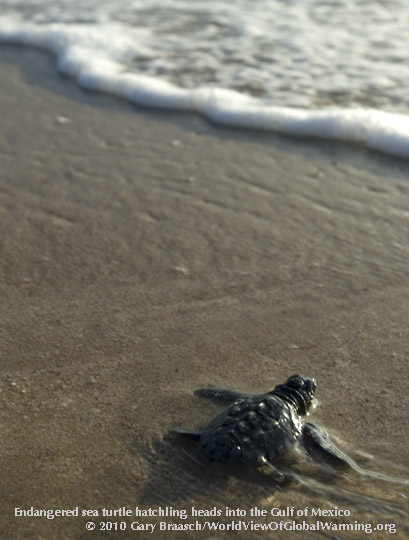
Think about the fishermen, the truck drivers, the restaurant owners and so many others who depend on this industry. Think also about the fish, birds, sea turtles and other marine life whose ecosystem has just been turned on its head.
There is a better way: clean energy.
While many countries have already embraced clean energy and adopted national policies to increase energy efficiency and the use of renewables, the United States continues to suffer from a reactive, outdated energy strategy. It’s been nearly a year since the U.S. House of Representatives passed its energy and climate bill (the American Clean Energy and Security Act), but the Senate has yet to begin serious debate on its own legislation.
Our policymakers are fiddling while Rome burns – or rather, while oil rigs burn and pollute our oceans and coasts.
Not only is America’s refusal to embrace clean energy endangering human health and wildlife, it is also costing us jobs, which are precious commodities in this time of economic hardship. Several energy companies, including GE and BP Solar, recently announced plans to invest millions of dollars to develop and expand clean energy facilities – not in the United States, where such investments and the jobs they bring are desperately needed – but in Europe and China. We need incentives for green energy jobs here at home.
Now is the time for the Senate to act. With photos of the oil spill on the front pages of newspapers across the country, Americans are starting to grasp the dangers of our country’s dependence on oil and other dirty sources of energy, and this awareness is being transformed into support for a new energy direction for our country.
While our unfortunate energy reality right now is that we need to continue to drill for oil, including to power our transition to renewable energy, we need to do so in a manner guided by a bold, long-term plan to achieve freedom from oil.

Between the high costs of our oil dependence (which we are reminded of daily by updates on the underwater oil volcano that BP and Halliburton have created) and the looming threat of Peak Oil, we must get a move on before we are forced to get a move on.

We have a choice.

Perhaps, it's the most urgent choice that humanity has ever faced, as the transport and food supplies of billions hang in the balance if we don't start acting with focused, inspired urgency to transition to clean energy and vehicles.

Climate Progress offered a good update on the Peak Oil situation this past weekend:
A storm is quickly approaching, and the world is not ready for it.

The permanent end of the era of cheap oil is coming as soon as next year, according to a raft of official reports that have made their way into energy media over the last few months.  Governments are now beginning to acknowledge the looming crisis. Yet, perhaps because they waited too long to prevent it, leaders are not yet alerting the public.

The entire world economy is built on cheap oil,  A permanent oil production shortage will thus lead to The End of The World (As We Know It).  What will come on the other side of this — will it be good or bad?

Public Unaware. Except for a few stories in financial pages such as London’s Financial Times, this earth-shaking news has yet to reach the Mainstream Media.  While “Peak Oil” researchers have long warned of approaching oil shortages, the difference now is these dire warnings are being validated by the highest government and oil company officials.  Yet, no political leader has had the courage to make a major announcement to prepare the public for what lies ahead.

This public blindness is tantamount to the isolationism that gripped the U.S. in the years preceding WWII.  While the highest government leaders did their best to prepare for inevitable war, they were hamstrung by the resistance of a public unable to accept what really lay ahead.  Similar to today, some politicians advanced their own careers by feeding on the public’s desire to believe no coming storm could ever reach them.  Yet, the storm came anyway.

The Limits of Oil. The looming crisis we now face is often referred to as “Peak Oil” — a status where global oil production will reach a plateau, then begin its irreversible decline.

We Can Do It. Though Americans resisted the recognition that WWII was coming, once it came they rose valiantly to the call to action. A similar can-do spirit is needed now for the transition to a post-oil world.

This crisis is coming soon.  It is too late to prevent it, so we simply need to get used to it.  Peak Oil is happening.

We will need to adapt – but we can do that.
The good news, which I emphasize on this blog time and again, is that the solutions to Peak Oil and climate change overlap in many ways, and both overlap with the solutions to our economic crisis, jobs crisis, and crisis of skyrocketing health care costs.

It is time for us to rise up as citizens and inspire Congress and the President to take bold action by passing an American Power Act that incorporates the lessons we are learning each and every day as we watch this Gulf of Mexico oil disaster unfold.  Click here for a fun way to write to your Senators, President Obama, and even your local newspaper.

Read more>>
...

Wednesday, May 12, 2010

Will the BP/Halliburton Oil Spill be a Game Changing Event in Our Energy History?


The more I read about the BP/Halliburton Oil Spill, the more I think about how absurd it is that we put untold $billions of business and government investment dollars into drilling for a toxic liquid that's so scarce at this point that we need to drill in 5,000-foot-deep water in the middle of the ocean to get it.

I mean, we can put people on the moon, but we're this slow in developing the political willpower to ramp up clean renewable energy and save our economy, health, security and environment from our addiction to this evil black slime of an energy source?

Watching events unfold, I'm speechless that BP not only wasn't prepared for something like this, but fought off government regulators' efforts to make sure they had all systems in place for making 100% sure they could shut off the spigot if something like this happened.  I'm even more speechless that regulators didn't spine up and force BP to invest in the spill prevention equipment that would, as we speak, be providing the company with a humongous return on investment. And I've completely had it with taking risks like this just to get at dirty energy and the many (very costly) ills that it inflicts upon society.  At this point, the risks we take for our dirty energy fix are akin to those that a heroin junky takes.  It's both immensely frustrating and pathetic that a society as advanced as ours can't be bolder in doing what is clearly right on energy.

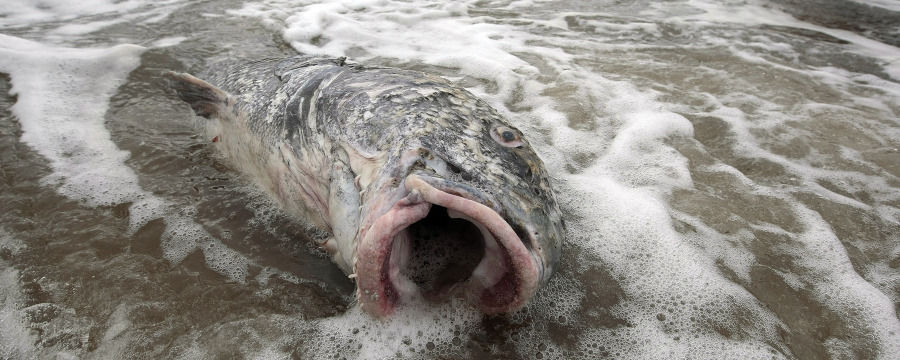
As both a scientist and a human being, I can't believe that not only is there an uncontrolled pipe spewing oil 5,000 feet down at the bottom of the ocean, but that the company responsible is being allowed to spray and pump millions of gallons of toxic dispersants into the spill to make it less visible.  On top of that, we really don't know what kind of impact such a massive quantity of toxic dispersants is going to have on the Gulf of Mexico ecosystem and its people alike.  Well, we do have an idea, and it's not pretty:

Chemically dispersing oil spills “solves the political problem of visible oil but not the environmental problem,” Robert Brulle, a 20-year Coast Guard veteran and an affiliate professor of public health at Drexel University, told me. These dispersants “do not actually reduce the total amount of oil entering the environment,” as a 2005 National Academy of Sciences report on the subject put it.
In short: out of sight, out of mind. But not out of the body of marine life.
Dispersants decrease the amount of oil that directly reaches the shores or the creatures that live on the shores or sea surface. But they increase the exposure to oil by creatures that live in the water or on the sea floor — like, say, shrimp or oysters.
I spoke to Carys Mitchelmore, one of the writers of the toxicity chapter for the NAS report. She explained that dispersants are “a molecule that looks like a snake. The head part likes water and the tail part likes oil.” The dispersant “pulls the oil into the water in the form of tiny droplets.”
And that means subsurface creatures — from oysters to coral to larval eggs — that might never have had significant exposure to the oil are now going to get a double whammy, getting hit by the oil and by the dispersants. Worse, the oil droplets are now in a form that looks like food (e.g., the same size as algae) to filter feeders like oysters, which otherwise may only have been exposed to the far lower levels of dissolved oil components found under a typical oil slick. The droplets can also clog up fish gills.
Mitchelmore noted that “oil contains a whole suite of toxic chemicals, including known carcinogens.” The dispersants can lead to far greater accumulation in living organisms of polycyclic aromatic hydrocarbons (PAHs) — oil-derived toxic compounds that were found in mussels 19 months after one spill in which dispersants were used. After the 1989 Exxon Valdez spill, a study found PAHs had an impact on the developing hearts of both Pacific herring and pink salmon embryos.
Pretty eye-opening, ain't it?  So then, what's going to happen to the people and their families and fishing boats and businesses (from fish wholesalers to retailers to restaurants to recreational fishing and tourism businesses) that depend on a healthy Gulf of Mexico?  What's going to happen to the shrimp and the oysters and the fish -- how long until we can really eat them safely once again?  What's going to happen to the sharks and rays and turtles that help hold the ecosystem together?  What's going to happen to the dolphins and the whales and the seabirds?  How long is this spill going to be a literal cancer on the Gulf of Mexico's communities and ecosystems alike?

Are BP, Halliburton and Transocean going to step up and do what's right by footing the bill to cure this cancer?  Are voters going to hold the government accountable and make sure our politicians learn the lessons on energy that are clearly being taught here?

For politicians who so strongly hang hats on slogans like "Pro-life" and "Pro-choice", how can we tolerate allowing even one more oil catastrophe like this to be inflicted upon our fellow citizens, our cherished natural heritage, and the wondrous diversity of life we share the earth with?  How can we continue to choose dirty oil when our clean energy alternatives offer a far better future for our environment, economy, health and security alike?

Our rapid transition to a clean energy economy, which will also help solve climate change and slow biodiversity loss, is my #1 voting issue.  Who's joining me in holding our politicians accountable for getting the job done?
...
Photo by Gary Braasch

Tuesday, May 11, 2010

New Battery Charger Could 'Fill 'er up!' in 3 Minutes


With all the talk of the unfolding BP-Halliburton oil spill disaster in the Gulf of Mexico, I'm happy to relay news of a technological advance in electric vehicles, which are on the verge of transporting millions of us from place to place sans petroleum.

The Triple Pundit reports:
A Japanese company is refining a technology that charges the battery pack in electric cars 50 percent full in three minutes, according to Green Car Advisor.
The system, which is about the size of a gasoline pump, could be a boon for the electric vehicle market, where long charge times for vehicle battery packs are a major obstacle to widespread adoption of EVs.
On that note, I'm going to head out for a spin on my electric-assisted bicycle, which is a blast to ride.  I can't wait to own my first electric car, and to be able to charge it via my home solar system...

Read more>>
...

Monday, May 10, 2010

UN Report Warns of Economic Impact of Biodiversity Loss

Coral reefThe UN today issued a new report that warned of the economic impact of biodiversity loss:

The relationship between nature loss and economic harm is much more than just figurative, the UN believes.
An ongoing project known as The Economics of Ecosystems and Biodiversity (TEEB) is attempting to quantify the monetary value of various services that nature provides for us.
These services include purifying water and air, protecting coasts from storms and maintaining wildlife for ecotourism.
The rationale is that when such services disappear or are degraded, they have to be replaced out of society's coffers.
Loss of coral reefs will reduce humanity's supply of seafood
TEEB has already calculated the annual loss of forests at $2-5 trillion, dwarfing costs of the banking crisis.
"Many economies remain blind to the huge value of the diversity of animals, plants and other lifeforms and their role in healthy and functioning ecosystems," said Achim Steiner, executive director of the UN Environment Programme (Unep).
"Humanity has fabricated the illusion that somehow we can get by without biodiversity, or that it is somehow peripheral to our contemporary world.
"The truth is we need it more than ever on a planet of six billion heading to over nine billion people by 2050."
The more that ecosystems become degraded, the UN says, the greater the risk that they will be pushed "over the edge" into a new stable state of much less utility to humankind.
For example, freshwater systems polluted with excess agricultural fertiliser will suffocate with algae, killing off fish and making water unfit for human consumption.
The main question that I keep coming back to is how we go about enacting land use plans that simultaneously protect biodiversity and human well-being without ticking a lot of people off.

How can we make conservation both possible and profitable, and transform the public's perception of biodiversity conservation from a threat to their economic well being to a new revenue opportunity?  It comes down to creating smart land management and policy solutions that reward property owners for the conservation value that their lands provide to society -- perhaps via some form of payments for ecosystem services system.

The bottom line is that humanity is still working on management and policy solutions for making conservation an economically viable alternative to extractive uses.  We're getting there in some places, but in many others, we've got real work to do.

Read more>>
...

Monday, May 03, 2010

20-Year Veteran of Coast Guard Comments on BP's Gulf of Mexico Oil Spill


Catching up on reading about the oil spill tonight, I enjoyed this post at ClimateProgress by sociologist and Coast Guard Veteran, Dr. Robert J. Brulle:

So now what?  I had hoped that we were beyond this sort of event.  But evidently we aren’t.
In the face of global climate change, and now massive catastrophic oil spills, why can’t we figure out that the fossil fuel era needs to come to an end, for our survival, and for the survival of the rest of the species with which we share this planet?  That we have much better alternatives than to continuing to “drill baby drill” – which has now turned into “spill baby spill.”  That we cannot drill our way to energy independence, and that every gallon of gas we burn brings the prospect of further ecological calamities from global warming closer.
We need a real commitment to renewable energy, and to stop investing in the polluting fuels of the past.  The sooner we get on with it, the less chance our children will have to face future disasters.

Indeed...

Some are now saying oil could rise to over $100/barrel this summer due to the heating economy and possible speculation in the oil market stemming from this spill.

I say bring it on.

It's probably exactly what the doctor ordered for Congress to pass climate change and clean energy legislation that is bolder and more effective than the yawner of a bill put forth by Senators Lieberman, Graham, and Kerry.

Of course, $100 doesn't even come close to reflecting the true cost of a barrel of oil...(this link is to an article by an Iraq war veteran)

Read more>>
...

Thursday, April 29, 2010

Gulf of Mexico Oil Spill Catastrophe: This Doesn't Happen With Clean Energy


As I've watched the Gulf of Mexico oil spill unfold over the last few days, a few thought have come to mind.

First, a note to God-fearing opponents of the bold climate change and clean energy legislation that will also help us deal with the looming Peak Oil crisis: watching the recent deadly coal mine disaster, quickly followed by this catastrophically costly, headline-grabbing (likely for weeks to come) offshore oil drilling disaster, does it seem kinda like The Lord is pissed about our dirty energy use?

It hasn't been a very good month for those raping Mother Earth for the dirty energy sources that are destabilizing the global climate system, threatening humanity's food and water supplies.

Second, how ironic that this oil spill catastrophe is going to hit the hardest economically in the deep southern U.S., the heart of political support for "Drill Baby Drill!"

The good news, especially given that the Senate is about to start debate on Climate Change and Clean Energy legislation: this type of disaster just doesn't happen with solar or wind power.

Sure, it's going to take a LOT of work and energy (and even fossil fuel use) to transition to clean energy.  But we CAN have energy without these deadly, catastrophically costly, economically destabilizing and toxic risks posed by fossil fuels.

Best of all, the building, installation, sales, administration, transport, you name it of all this clean energy infrastructure is going to create the millions of new jobs our economy badly needs.  They are good jobs that will make people proud -- coming with the badge of honor that they have joined the clean energy revolution that is freeing America from our addiction to dirty oil and other fossil fuels.

Now it's up to Congress to make it happen and unleash the tsunami of clean energy technology investment that's been waiting on the sidelines for the rules of the game to be established.

Let's play ball, and play to win.
...