Showing posts with label the media. Show all posts

Friday, February 13, 2009

In Key First 100 Days Action, Congress Mulling Return of the Fairness Doctrine

Back in 2007, when I blogged about David Orr's '100 Days of Climate Action', one of the key actions that Orr recommended be part of the next President's 'First 100 Days' agenda was reinstating the Fairness Doctrine:

The president must craft a communications strategy that rapidly educates the public about the science of climate change and the risks of a delayed response, and shows a plausible way forward consonant with economic advantage and our national heritage. The goal is to create a broad and stable coalition around the national interest in climate stability that protects our long-term security and prosperity and distributes the costs and benefits fairly.

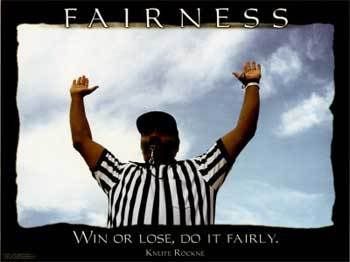
To ensure that the public is adequately informed, not mislead and deliberately confused, the president should direct the Federal Communications Commission, among other things, to reinstate the "fair and balanced" standard necessary to hold a license to broadcast over the public airwaves.

Well, today we have great news -- Congress is apparently mulling making it happen.

I often wonder how much of rural America's heavily Republican views stem from a lack of media balance -- in much of rural America, all you can get on the radio is conservative radio talk shows, country music, and evangelical radio. There is a complete lack of balance.

Restoring the Fairness Doctrine would be a huge victory for American Democracy. It will be a major step forward that helps make sure that voters all across America are properly informed about key issues in a (truly) fair and balanced manner.

Wednesday, September 10, 2008

The Future of America's Major Media Outlets - Fixing the Fourth Estate After Failures On Drilling and Iraq

Why do the American People -- needing the right information to choose a president whose policies will prevent Peak Oil and Climate Change from becoming society-destabilizing catastrophes -- believe the fantasy that domestic oil drilling is the right energy solution to bring down gas prices? How can this be, when even our Department of Energy's own Energy Information Administration makes clear that this idea has no more basis in reality than believing that the Superfriends are going to save us by swooping down and leaving solar-powered hovercrafts in our driveways?

As this disturbing report from the Center for Economic and Policy Research (CEPR) points out:

"there is no empirical basis for believing that drilling in environmentally sensitive offshore zones would significantly affect gas prices. The U.S. Department of Energy's Energy Information Administration (EIA) projects that such drilling would add some 200,000 barrels of oil per day at peak production in about 20 years. This is about 0.2 percent of world production, and the EIA describes this as too small to have any significant effect on oil prices."

Even if the EIA's projections end up being short by a factor of five, and these areas produce 1 million barrels per day, it will still take well over a decade for this oil to reach gas stations, and will still be only about 1% of global output -- far too little to significantly bring down gas prices. So if this is what the best available data tells us, the critical question becomes the one that the CEPR report examined:

"How did 51 percent of Americans come to believe the opposite, that this drilling would significantly lower gasoline prices?"

The report's authors found that:

"By repeatedly reporting the false claims of drilling proponents, while giving little or no attention to the available facts, the most important news media helped to convince the public of something that is not true, and thereby influenced the entire political climate around this issue."

The Study - Methods and Results

The authors examined 267 news programs between June 16th and August 9th, 2008 that covered the drilling issue, including ABC World News Tonight, NBC Nightly News, CBC Evening News, The Today show, Good Morning America, Meet the Press, CNN, and Fox News. They found, shockingly, that of those 267 news programs:

"there was only one, or less than one half of one percent, that cited the EIA's estimate that the increased oil production would not significantly affect gasoline prices."

Just as disturbingly, when examining coverage of politically-charged calls for increased domestic drilling as a solution to high gas prices:

"in 91 percent of the news programs in this sample, the opposing 'opinion' (that domestic drilling will not, according to our best data, come close to solving our woes at the pump) was not even presented...despite the fact that this dissenting 'opinion' is actually true."

It's not just the major media outlets who the public can't trust to present the drilling issue credibly, the report notes. It's also Republican Presidential Candidate, Senator John McCain, who has repeatedly said that increased domestic drilling will bring gas prices down. Not surprisingly, the authors point out that talk radio is also enforcing this view:

"Rush Limbaugh's radio show, for example, reaches an estimated audience of 14.25 million people per week. Limbaugh, like other conservative talk show hosts, repeatedly reinforced the view that the proposed drilling was necessary to lower gasoline prices."

The report's conclusion packs a punch:

"Major media outlets provided daily repetition of the false claim that expanded drilling in environmentally sensitive zones would lower gasoline prices. At the same time, these outlets failed to report the official data from the Department of Energy's Energy Information Agency, which showed that these claims were false. There can be little doubt that this reporting had a significant impact on public opinion, and contributed to the widespread misunderstanding reflected in polling data. In doing so, the major media exerted a very significant influence on an important matter of national policy. The media have most likely changed the debate and political climate in a way that would not have been possible if they had simply reported the most important official data, thereby showing that the central claim in this debate was false."

The Traditional Mass Media - A Broken Fourth Estate

The traditional mass media programs covered by this study should be embarrassed. Jefferson, who called for the media to act as a Fourth Estate that educates the people so that our democracy can function properly, hangs his head in heaven. Somebody should probably go to jail for the decisions that have so grossly misinformed the American people about the right energy policy prescriptions for solving the intertwined problems of high gas prices, Peak Oil, and climate change. Especially when the solutions -- sustainable clean energy and energy conservation -- hold so much promise as not only climate change solutions, but solutions that will grow our 21st century economy, create jobs and fight poverty, and improve our public health, national security, and quality of life.

Fixing the Fourth Estate - A Key Energy Independence and Climate Change Solution

If we are to prevent Peak Oil and Climate Change from becoming disasters that shake the foundations of life as we know it, America needs to focus on real solutions -- solutions that the best available information from our best experts tell us have the best prospects for success. While there is no one silver bullet that will replace the oil that powers our vehicles -- while also helping us avoid, or at least minimize climate change -- the media needs to be held accountable if they are presenting the public with information that is influencing America's most important policy decisions, and that information is wrong. Just look at what this type of negligence cost American taxpayers (not to mention the lives of our brave soldiers and their families) when major media outlets failed to vet the drive to war in Iraq! Our major media outlets' failure to properly educate the American people in critical issues like this reminds me of a key recommendation for solving climate change that David Orr made in his legendary essay, "One Hundred Days of Climate Action":

"To ensure that the public is adequately informed, not mislead and deliberately confused, the president should direct the Federal Communications Commission, among other things, to reinstate the "fair and balanced" standard necessary to hold a license to broadcast over the public airwaves."

Clearly, it is time.

In my next piece, I'll discuss another reason I think the American people take to drilling right now more readily than to renewables. I'll also discuss how, from the standpoint of behavior change science, by becoming a part of the clean energy revolution, YOU can help shift public opinion away from the fossil fuels of the 20th century and build public confidence in the emerging Clean Energy-powered economy of the 21st century.

Friday, February 08, 2008

Chris Matthews Fails America, Embarrasses MSNBC, on Climate Change

One of the things that really scares me about the politics of advancing climate change solutions is the unbelievable ignorance of current and former elected officials like James Inhofe and Tom Delay.

Yesterday, Delay was on Chris Matthews' MSNBC show, Hardball. When Matthews asked Delay for "the official conservative position on climate change", Delay stated that:

"there is no science to suggest that man is the cause of climate change", and "it is arrogant to suggest that man can affect climate change. There is no science that supports such a notion."

How about, perhaps, the joint statements of the G8+5 nations' National Academies of Sciences?

What was just as concerning to me as Delay's absurd statement is the lack of a pointed response from Chris Matthews. Hardball, you call your show, Mr. Matthews?! You completely abdicated your responsibility to educate your viewers in the best available knowledge on climate change by failing to challenge Delay's wrong, if not delusional statement.

For those of you who are working hard to advance climate change solutions, and are highly discouraged by Matthews' failure to properly play 'Hard Ball' with Delay on this most important matter, email Chris Matthews at hardball@msnbc.com and ask him to do a better job next time.

- Jon Gelbard

P.S. The level of ignorance displayed by Delay here suggests to me that people should really be required to pass some kind of basic exam before they are allowed to run for major public offices and make decisions that affect the well being of the entire world. Otherwise, you end up with people in power who absolutely lack the knowledge and competence to be formulating policies. We've certainly been learning this the hard way the past 8 years!

Saturday, December 22, 2007

Motivating Sustainability - Ingraining It in the Lives of Our Favorite Movie and TV Characters

I like this idea of advancing sustainability 'subliminally' by ingraining green products and practices into the daily routines of movie and TV characters. In the words of Paula Silver, founder of Beyond The Box Productions, which markets independent films:


"Social norming is about making behavior seem like you do it all the time," Silver said during a discussion on marketing green messages at the first annual Hollywood Goes Green conference in Los Angeles.


"It seems to me that if we can put some of these messages subliminally into the action so that you see somebody recycling, you see somebody turning off, pulling out their plugs," continued Silver. "It's about seeing and doing and creating that performance structure so that people say, 'I should be doing that.':


Very intriguing, and I'll bet it works to a fairly significant extent. After all, isn't the spread of recycling often attributed to folks seeing more and more of their neighbors doing it?

Friday, October 12, 2007

Leading the Fight Against Climate Change (and Peak Oil): Is the Next President the Most Important in U.S. History?

First, a big congratulations to Al Gore and the Intergovernmental Panel on Climate Change (IPCC) for winning the Nobel Peace Prize. The global significance of this award provides yet another demonstration of the increasing realization of (most) world leaders that unless we take action fast and take action now, climate change is going to pose a huge challenge to life as we know it sooner than we'd like.

Thus as we approach the 2008 elections, it is becoming clear that with the threats posed by unexpectedly rapid climate change looming larger each year, the next president of the United States will be the most important in America's history. This president will need to mount a New Deal-like 'One Hundred Days of Climate Action', which both leads the world in staving off a climate catastrophe, and weans America (and the world) from our increasingly precarious dependence on oil.

Such are the conclusions of David Orr, William S. Becker, James Gustave Speth, and former Senator Gary Hart in four superb articles published in the August, 2007 issue of the journal, Conservation Biology. The articles, says Orr, were the conclusion "of a small group convened by Ray Anderson, Jonathan Lash, and Bill Becker in 2006 to discuss leadership and sustainability."

One of the outcomes of the meeting, says Orr, was "the formation of an effort to define the first steps that must be taken by the new administration in 2009 to create and implement a climate action plan adequate to the emergency ahead. We focused on the first 100 days so as to shed light on the critical importance of the first steps in a new direction."

One Hundred Days of Climate Action

Back in the first 100 days of the Roosevelt Administration -- which Orr's 100 days of climate action is modeled after -- the crisis at hand was much more tangible: the debilitating economic conditions of The Great Depression. Today's crisis of accelerating climate change is, as of yet at least, not nearly as tangible to most Americans. Of course, that could easily change quite quickly, as it did for thousands of Gulf Coast residents following Hurricane Katrina. The prospect of more frequent and intense Katrina-level climate disasters -- from hurricanes to tornadoes to floods to droughts -- hammers home the reality that, as Orr emphasizes, "it will be far cheaper to act now than at some other date, by which time effective action of any kind will be difficult or impossible." (a possibility that insurance companies are certainly worried about)

Orr recommends that the next president make 10 key choices to shift our country, and eventually the world, to a largely emissions-free energy infrastructure over the next 50 years:
1. The president must make a climate action plan the linchpin connecting other issues including policies for security, economy, environment, and justice.

2. The president elect and the transition group must identify unusually talented potential appointees who can quickly gain public confidence and command the machinery of government, and who share a commitment to act decisively to meet the challenges posed by climate change.
We cannot afford any more of the crippling cronyism and incompetence in key positions that has characterized the current administration.
3. The president must rise above the divisions of right and left, stake out common ground, and present a vision of the safer, healthier, more secure America that we can achieve by confronting climate change.

4. The president must craft a communications strategy that rapidly educates the public about the science of climate change and the risks of a delayed response, and shows a plausible way forward consonant with economic advantage and our national heritage. The goal is to create a broad and stable coalition around the national interest in climate stability that protects our long-term security and prosperity and distributes the costs and benefits fairly.

To ensure that the public is adequately informed, not mislead and deliberately confused, the president should direct the Federal Communications Commission, among other things, to reinstate the "fair and balanced" standard necessary to hold a license to broadcast over the public airwaves.
5. The president should outline a course in which we rapidly remove carbon from the U.S. energy system. This policy would (1) reduce our dependence on imported fuels; (2) minimize our vulnerability to political conflicts in unstable parts of the world, (3) reduce our balance of payments deficit and money going to fund terrorist groups; (4) lower the total costs of energy, notably those costs that are now externalized; (5) generate better technology and a better economy; (6) create good and stable jobs; (7) improve air and water quality; (8) protect public health; (9) lower health costs; and (10) reduce the influence of entrenched energy industries on U.S. politics.
The right energy policy, emphasizes Orr, "should solve many different problems including that of climate change and national security while providing other collateral benefits."
6. The president should expand the federal capacity to implement climate policy consistently across all aspects of government, from assessing new technologies (ala the Office of Technology Assessment, which was terminated in 1994) to responding to disasters (a need that was clearly demonstrated by Hurricane Katrina).

7. The president would be wise to initiate a longer-term effort to reign in the power of money in politics - which has badly corrupted the policy process and rendered it largely ineffective for solving America's most pressing problems. Although there is no shortage of ideas on how to do so, the best solution would be to remove money from the electoral process once and for all by publicly financing elections to national offices.

8. In the first 100 days, the president must take bold steps to rejoin the international community on climate, security, and economic issues. There is no prospect of stabilizing climate without a coordinated global effort. The world is waiting for U.S. leadership to help create a global partnership on climate policy.

9. Federal action is necessary, but not sufficient. The next president should create a national commission on local responses to climate change focused on the steps required to build locally and regionally resilient economies, food systems, and distributed energy networks that would enhance the capacity to withstand disruptions caused by climate change.
Orr cites the model of the Civilian Conservation Corps as a good model of how the government can organize a rapid mass-proliferation of wind farms and solar technologies, and help improve energy efficiency in low-income communities.
10. The next president must change the spirit of this country, exorcising the fears that have manifested in demons that haunt our nights and darken our days. In the light of higher purpose and clearer vision we might once again be a great, not merely powerful, nation.
The Most Important President and Us

William S. Becker, in the article following Orr's, agrees that "I think we can say without exaggeration that the American people are about to elect the most important president in our history." He emphasizes, however, that the responsibility to solve the climate crisis lies not only with the president, but also with the American people, who, he says, must end their reluctance to be lead. Becker elegantly states that:

"As a people, we need to be smarter, tougher, more entrepreneurial, and eager to regain our edge as a culture of invention and industry. We must show that our opposite thumbs still have capabilities beyond operating the remote control and that we still deserve to be called the most intelligent species."

"We will have to wake up from the dull denial that masks the cruel ironies of our mindset. We stick yellow magnetic "support our troops" ribbons on the back of our urban assault vehicles while we fill their insatiable tanks with gasoline, enriching nations that support the terrorists our troops are presumably in the Middle East to fight."

He concludes that:
"The challenge Orr describes so well for the next president is really the challenge that faces us all. We must be willing to accept the feedback coming from the ecosystem; to raise the standards of politics, government, and leadership; and to give our candidates and leaders permission to be bold."
Indeed, the fight versus climate change requires big, bold steps from the next president, Congress, local governments, businesses, and the American people alike. The good news, which I emphasize time and again on this blog, is that working to implement climate change solutions will provide all Americans with a much-needed positive vision and a beacon of hope to aspire to as a nation: growing a new, more stable renewable energy-powered economy, improving our public health and national security, and protecting the health of the earth's wondrous ecosystems and biodiversity. Perhaps most important to our quality of life, it will help us to prepare for and sidestep the potentially calamitous consequences of another looming threat -- Peak Oil.
...
Tuesday, September 04, 2007

Americans Care More About Gay Marriage Than Global Warming?

Just back from an inspiring few days at Burning Man's 2007 "Green Man"-themed event, which I'll blog about later today. I'm still formulating my thoughts on just how green it really was.

As I catch up on sustainability news, I came across this provocatively-titled story from Treehugger, titled "Americans Care More About Gay Marriage Than Global Warming."

It summarizes a new study:
Pollster American Environics studied American attitudes toward energy and the environment and found depressing results:
1) Americans overwhelmingly believe that global warming is occurring.
2) They don't care. "dealing with global warming" came 20th out of 23 policy priorities.
3) They won't give anything up. The cost of energy is more important than global warming.
As the graph shows, 69 percent of the public is prepared to overlook disagreement about the environment and there are six issues that rate ahead of the environment in terms of the number of people who consider them dealbreakers.

On one hand, this type of study can be construed to reflect a depressing failure of America's traditional media to effectively communicate the importance of taking action to stop global warming. The researchers' results indicate that to many Americans, global warming is still viewed as just an environmental issue; until it starts hitting more peoples' pocketbooks or health, it's not going to become a decisive voting issue.

The good news, however, lies in the report's finding that people are more likely to care when global warming is framed as an energy issue:


Coupling global warming with energy independence, higher gas prices, and national security increases the issue’s saliency. While global warming and energy are inextricably intertwined at a policy level, most voters do not see energy through an environmental lens. Action on global warming and energy independence rank as a higher priority concern than “strengthening the military and keeping America safe,” according to Democracy Corps in March 2007.


As I've noted previously, solving global warming and solving Peak Oil are really opposite sides of the same coin. The same types of solutions that are needed for America to achieve energy independence - much greater efficiency, combined with cleaner fuels and clean energy technologies (and supporting tax/incentive policies to aid in their proliferation) - will also dramatically reduce our greenhouse gas emissions.

Thus, note to 2008 Presidential candidates and sustainability proponents alike - this study has some great clues for how to market and communicate the importance of fighting climate change, and the benefits of going green in general, to average Americans.

Friday, August 24, 2007

Ecosystem Services Gaining Mainstream Attention

The topic of ecosystem services has hit the mainstream - Wired magazine with a new article titled, "Eco-Capitalists Save Mother Nature By Charging For Her Services".

Thanks to Adam Davis for the headsup!

In the next day or two, I'll be posting some thoughts on the amazing ecosystem services lectures I attended at the recent meeting of the Ecological Society of America...

Tuesday, May 23, 2006

Anti-Gore Movie Crowd Pushes Myth That Stopping Global Warming Will Destroy The Economy

I guess it had to be expected, but with momentum building behind Al Gore's new movie, An Inconvenient Truth, people who are against progress (are regressive) when it comes to curbing global warming are resorting to the old "its gonna destroy our economy" myth.

This is where as a scientist and solution-focused sustainability specialist familiar with the many benefits of climate change solutions, I become extremely disappointed in mass media organizations like Fox News for being very irresponsible (see photo above). For example, when it comes to the importance of fighting global warming, does Fox News know better than:

1. The joint statement of the National Academies of Sciences of 11 leading world nations about the importance of fighting climate change?

2. The authors and publishers of the following articles reporting on and proposing ways that solutions to climate change will in fact (a) improve our economy, public health, economic and national security, and quality of life, and (b) help us avoid grave economic, health and security threats:
Just asking.

Society really needs the major TV news networks, who hold so much power over the public discourse, to step up a whole lot more than they have to properly inform the (voting) public about the opportunities offered by and threats to be averted by reversing climate change.